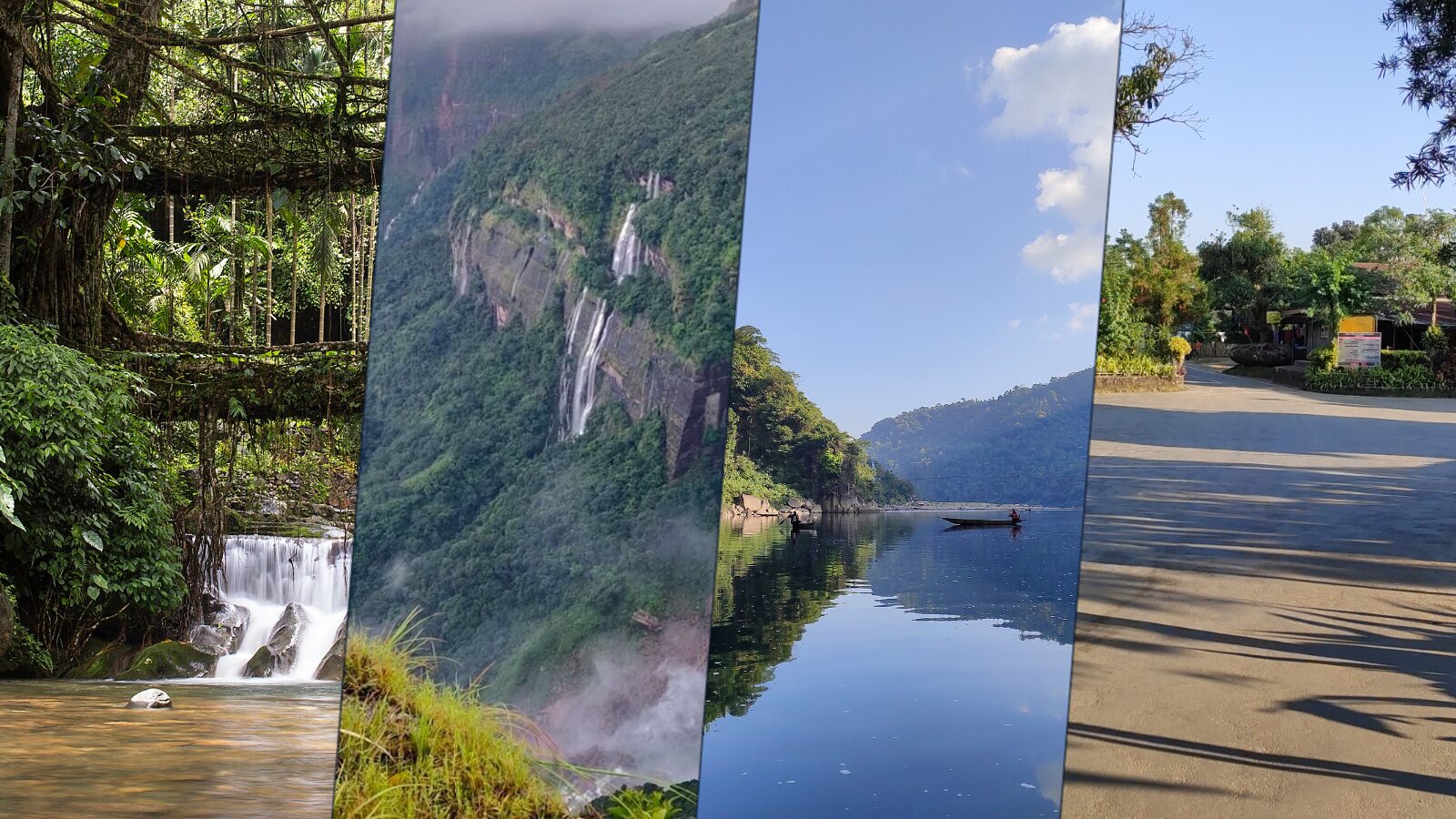
Meghalaya means "the abode of clouds", and it lives up to the name. On a Meghalaya trip you'll watch clouds pour into deep green valleys from the edge of a cliff, walk down thousands of steps to bridges grown from the living roots of rubber trees, see some of the tallest waterfalls in India and take a boat on a river so clear it looks as though it's floating in mid-air.
It's also one of the easiest trips in the Northeast to plan: no permits are needed for Indian visitors, the roads from Guwahati are good, and six days is enough to see the best of it. This guide gives you a six-day Meghalaya itinerary, the best time to go, how to get around, where to stay, what to eat and what it costs.
The best time for a Meghalaya trip
| Months | What to expect |
|---|---|
| October to November | Clear skies after the monsoon, full waterfalls, green hills. One of the best times |
| December to February | Cool to cold, dry and clear. Waterfalls are thinner, but Dawki's river is at its clearest |
| March to May | Warm and pleasant, with spring showers. Good for everything |
| June to September | The monsoon. Sohra is one of the wettest places on earth. Waterfalls are spectacular, but treks are slippery, views vanish in cloud and Dawki's boats often stop |
For waterfalls and green hills, go in October or November. For the clearest water at Dawki, go from December to April.
Indian visitors don't need an Inner Line Permit for Meghalaya. Our Inner Line Permit guide explains which neighbouring states do need one.
How to get to Meghalaya
Almost every Meghalaya trip starts in Guwahati, which has the region's main airport and railway station. Shillong is about 99 km from Guwahati, around 3 hours by road on JrnyLoop's estimate, on a good highway that climbs past Umiam Lake. Shared taxis and buses run all day, or you can hire a car with a driver.
Shillong also has a small airport at Umroi, with a few flights.
A 6-day Meghalaya itinerary
| Day | Plan | Night |
|---|---|---|
| 1 | Guwahati to Shillong, Umiam Lake | Shillong |
| 2 | Shillong to Sohra (Cherrapunji): viewpoints and waterfalls | Sohra |
| 3 | The double-decker living root bridge at Nongriat | Sohra or Nongriat |
| 4 | Mawlynnong and Dawki | Dawki or Shnongpdeng |
| 5 | Dawki to the Jaintia Hills: Krang Suri and Nartiang | Jowai or Shillong |
| 6 | Shillong to Guwahati | Home |
Day 1: Guwahati to Shillong
Drive up from Guwahati, stopping at Umiam Lake (Barapani), a huge reservoir surrounded by pine-covered hills, for the view. In Shillong, walk around Ward's Lake and Police Bazaar in the evening, and eat jadoh (Khasi red rice cooked with pork) at a local restaurant. Shillong is known for its music scene, so look for a café with live music.
Day 2: Sohra (Cherrapunji)
Drive about 55 km to Sohra, stopping at Elephant Falls and the Mawkdok Dympep valley viewpoint, where the road runs along the edge of a deep gorge. In Sohra, see Nohkalikai Falls, the tallest plunge waterfall in India, dropping into a turquoise pool, the Seven Sisters Falls (Nohsngithiang) at their best after the monsoon, and Mawsmai Cave, a short limestone cave you can walk through. End at a viewpoint for sunset over the plains of Bangladesh.
Day 3: The double-decker root bridge
This is the day most people remember. From Tyrna village, walk down about 3,500 steps to Nongriat, crossing swaying steel suspension bridges over the river, to the famous double-decker living root bridge, two bridges, one above the other, grown over generations by the Khasi people from the roots of rubber fig trees. Swim in the natural pools at Rainbow Falls, an hour further on, if you have the energy.
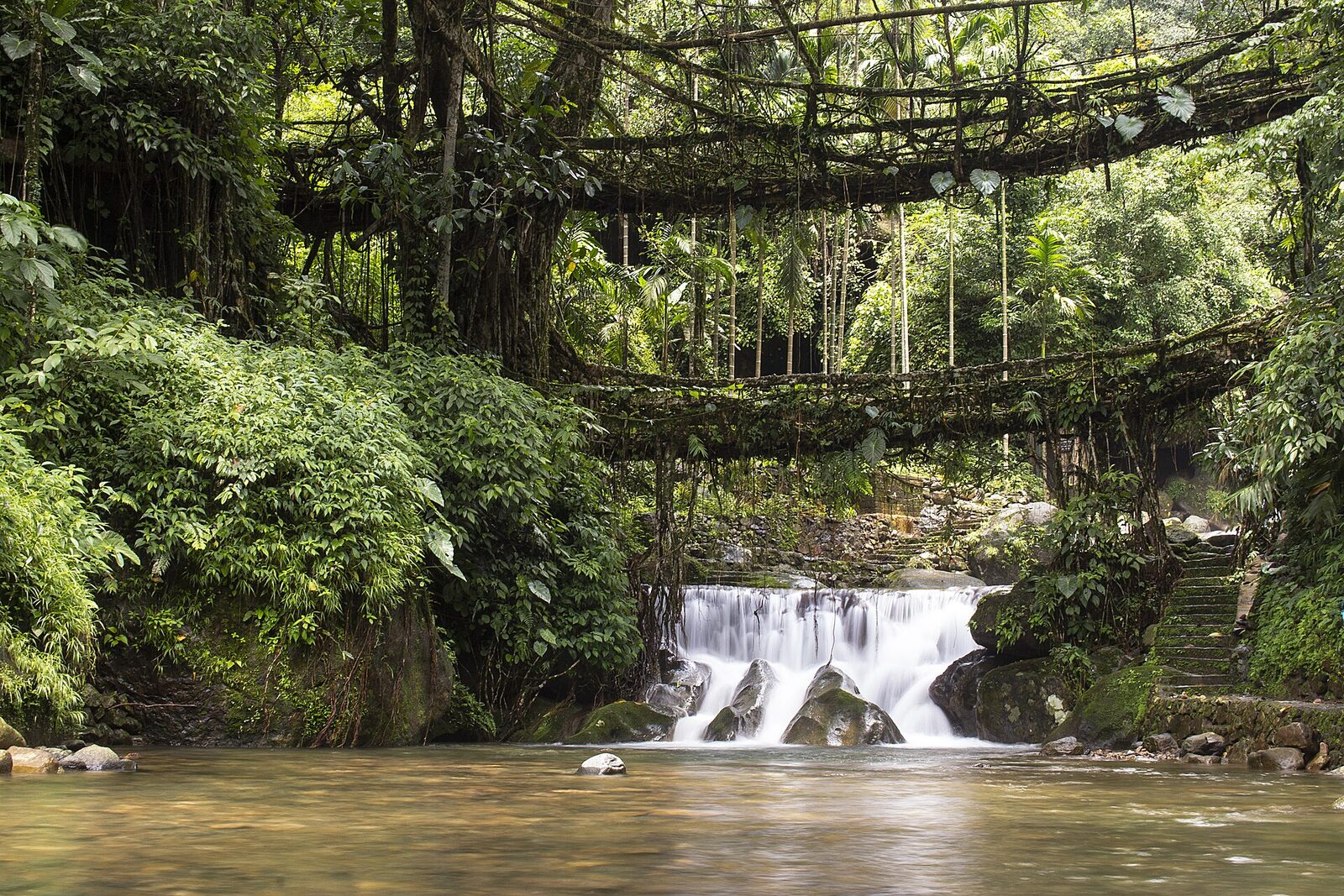
The trek down is long and the climb back up is hard: allow a full day and go with a local guide if you're not a regular walker. Start early, carry water, and wear shoes with good grip. Many people stay overnight in a simple homestay in Nongriat and climb up the next morning.
Day 4: Mawlynnong and Dawki
Drive to Mawlynnong, often called one of the cleanest villages in Asia, with bamboo dustbins, flower gardens and a single living root bridge at Riwai nearby. Climb the bamboo Sky View tower for a view over the Bangladesh plains.
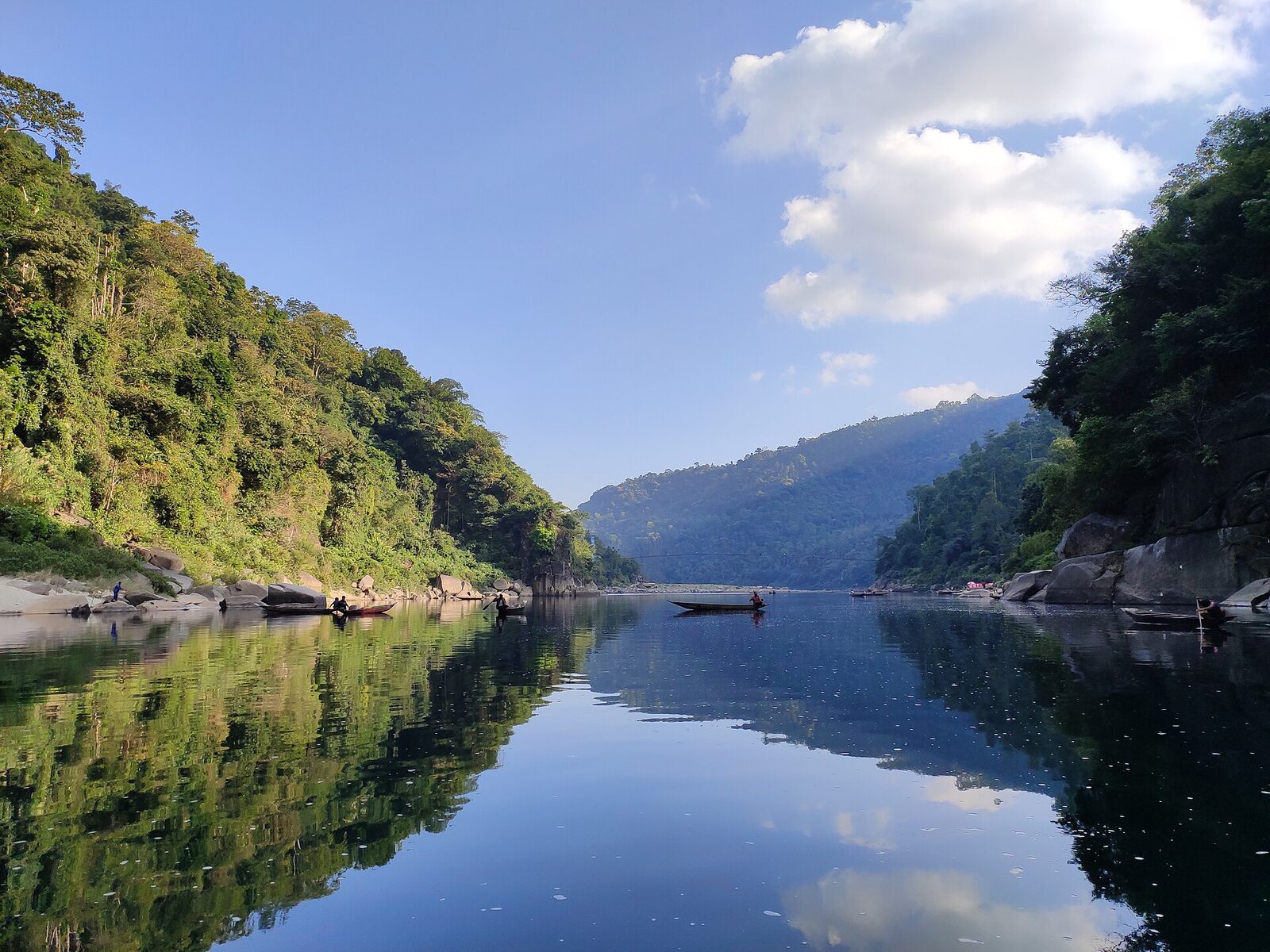
Then continue to Dawki on the Umngot river. Between December and April, the water is so clear that boats seem to float on air. Take a boat ride from Shnongpdeng, a village a few km upstream, where you can also kayak, snorkel or camp on the riverbank.
Day 5: The Jaintia Hills
Head east into the quieter Jaintia Hills. Krang Suri Falls drops into a startlingly blue pool where you can swim with a life jacket. Visit the Nartiang monoliths, a garden of hundreds of standing stones raised by the Jaintia kings, and Thadlaskein Lake. Stay in Jowai or drive back to Shillong, about 2 hours away.
Day 6: Back to Guwahati
Drive back to Guwahati for your flight or train, with a last stop at Umiam Lake.
Shorter and longer versions
4 days: Shillong, a night in Sohra with Nohkalikai and the double-decker root bridge, and Dawki on the way back to Shillong.
8 to 10 days: add Laitlum Canyons near Shillong for dramatic views, Mawphlang Sacred Forest, the Siju Caves in the Garo Hills, or continue to Kaziranga for rhinos. Our North East India trip guide has longer routes.
Getting around Meghalaya
- Car with driver: the easiest way to do this Meghalaya trip, about ₹3,000 to ₹4,000 a day for a small car, booked in Guwahati or Shillong. Many tourist taxis are run by locals who double as guides.
- Shared taxis (sumos): cheap and frequent between Guwahati, Shillong, Sohra and Jowai, but less flexible for sightseeing.
- Self-drive: possible, but roads are narrow, winding and often foggy. Local rules on tourist vehicles from outside the state change from time to time, so check before you drive in.
Where to stay
| Area | Price a night | Why |
|---|---|---|
| Police Bazaar, Shillong | about ₹1,500 to ₹4,000 | Central, close to food and taxis |
| Laitumkhrah, Shillong | about ₹2,000 to ₹5,000 | Cafés and a younger crowd |
| Sohra homestays and resorts | about ₹1,200 to ₹5,000 | Base for the waterfalls and root bridges |
| Nongriat homestays | simple and cheap | A night beside the double-decker root bridge |
| Shnongpdeng riverside camps | about ₹1,500 to ₹4,000 | Wake up by the Umngot river |
What to eat
Khasi food is simple, hearty and often pork-based. Try jadoh, doh khlieh (a pork salad with onions and ginger), dohneiiong (pork in black sesame), tungrymbai (fermented soybean) and pumaloi (steamed rice cake). Vegetarians will find Indian and Chinese food everywhere in Shillong. Don't miss a cup of local tea and the bakeries of Police Bazaar.
What a 6-day Meghalaya trip costs
A rough budget per person for two people sharing, not counting travel to Guwahati:
| Budget | Mid-range | |
|---|---|---|
| Stays (5 nights, per person) | ₹3,500 to ₹6,000 | ₹7,500 to ₹13,000 |
| Car with driver (6 days, shared) | ₹9,000 to ₹12,000 | ₹9,000 to ₹12,000 |
| Food | ₹3,000 to ₹4,500 | ₹5,000 to ₹8,000 |
| Entry fees, boats and guides | ₹1,500 to ₹2,500 | ₹2,500 to ₹4,000 |
| Total per person | ₹17,000 to ₹25,000 | ₹24,000 to ₹37,000 |
Shared taxis instead of a private car bring the budget version down considerably. For more ideas, see how to plan a budget trip in India.
Meghalaya travel tips
- Carry rain gear in every season. Sohra can rain any time.
- Start early. Clouds often roll in by late morning and hide the views.
- Respect village rules. Many villages charge a small entry or parking fee, and some sacred forests have strict rules. Don't take anything from them.
- Keep cash. ATMs are scarce outside Shillong, and UPI depends on patchy signal.
- Check Dawki before you go. Boating stops when the river is high after heavy rain.
Shillong: what to do in the city
Shillong itself deserves a day. Visit Ward's Lake and the Lady Hydari Park, the Don Bosco Museum, one of the best museums of the cultures of the Northeast, and the Cathedral of Mary Help of Christians. Watch the sunset from Shillong Peak, the highest point near the city (check access, as it's near an Air Force area), and walk down to Laitumkhrah for cafés and live music. Shillong is often called the rock capital of India, and evenings in its cafés and bars are part of the experience.
Laitlum Canyons and Mawphlang
About an hour from Shillong, Laitlum Canyons is a ridge with jaw-dropping views down into deep green gorges, especially on a clear morning. Mawphlang Sacred Forest is an ancient forest protected by the Khasi community for centuries, where nothing may be taken away, not even a leaf. A local guide walks you through it and explains the traditions.
The Khasi, Jaintia and Garo peoples
Meghalaya is home to three main peoples: the Khasi in the central hills around Shillong and Sohra, the Jaintia (Pnar) in the east around Jowai, and the Garo in the west. The Khasi and Jaintia follow a matrilineal system, in which family names and property pass through the mother's line, and the youngest daughter traditionally inherits the ancestral home. Respect local customs, ask before photographing people and sacred places, and follow village rules on entry fees and behaviour.
How living root bridges are made
The living root bridges of Meghalaya are grown, not built. Khasi and Jaintia villagers guide the aerial roots of the Indian rubber tree (Ficus elastica) across a stream, often using hollowed-out betel nut trunks or bamboo as guides. Over 15 to 30 years, the roots grow strong enough to walk on, and they keep getting stronger as they grow, lasting for centuries. The double-decker bridge at Nongriat is the most famous, but there are dozens across the hills, including at Riwai near Mawlynnong and in the villages around Mawkyrnot.
Meghalaya's caves
Meghalaya has some of the longest and deepest cave systems in India. Mawsmai Cave near Sohra is easy to walk through, with lights. Arwah Cave nearby has fossils in its walls. The Siju Caves in the Garo Hills and the vast Krem Liat Prah system in the Jaintia Hills are for serious cavers. Go only with experienced local guides for anything beyond the show caves.
Meghalaya with children
Children love the waterfalls, the boats at Dawki, the bamboo Sky View at Mawlynnong and the easy Mawsmai cave. Skip the double-decker root bridge trek with young children, as the steps are many and steep, and visit the single root bridge at Riwai instead. Pack rain gear, spare clothes and snacks, as food options on the road are few.
Common mistakes in Meghalaya
- Starting late, and finding the views hidden by afternoon clouds.
- Visiting Dawki in the monsoon, when the river is muddy and boats may not run.
- Underestimating the root bridge climb.
- Not carrying cash for village entry fees, parking and local guides.
- Ignoring local rules at sacred forests and villages.
Meghalaya's festivals
- Shad Suk Mynsiem (April): a Khasi thanksgiving dance in Shillong.
- Behdienkhlam (July): the Jaintia festival in Jowai, to drive away disease and bring a good harvest.
- Nongkrem dance (autumn): a Khasi festival at Smit, near Shillong, with dancers in traditional dress.
- Wangala (November): the Garo harvest festival, with drums and dance.
- The Cherry Blossom Festival (November): Shillong celebrates the flowering of the Himalayan cherry trees, with music and food.
Dates change every year, so check them before you plan.
What to buy in Meghalaya
- Lakadong turmeric: from the Jaintia hills, known for its high curcumin content.
- Honey from the forests and villages.
- Eri silk (ryndia), the soft, warm silk woven by Khasi women.
- Bamboo and cane crafts, like baskets and boxes.
- Local tea and spices.
Buy from cooperatives and village shops, where the money goes directly to the makers.
Responsible travel in Meghalaya
Many of Meghalaya's best sights, like waterfalls, root bridges and caves, are on village or community land, and the villages collect small entry and parking fees that pay for upkeep. Pay them gladly, and keep the receipts. Carry your plastic back with you, as many villages, like Mawlynnong, work hard to stay clean. Don't swim where locals say it's unsafe, stay on marked paths at the root bridges, and ask before photographing people. Choose village homestays and local guides, so your money stays in the community.
Plan your Meghalaya trip with JrnyLoop
Tell JrnyLoop where you're starting and that you're going to Shillong, then add Sohra and Dawki as stops. It plans the route with realistic times for Meghalaya's winding roads, lays out each day with viewpoints early before the clouds, the root bridge trek on a full day of its own and Dawki for the clearest light, and budgets the trip for your group. It also packs for the rain.
Meghalaya is also one of the best places to visit in monsoon, if you love rain, and one of the most unusual honeymoon destinations in India.
The short version
Go between October and May, with October and November best for waterfalls and December to April best for Dawki. Give it six days: Shillong, two nights in Sohra for the waterfalls and the double-decker root bridge, Mawlynnong and Dawki, and the Jaintia Hills. Hire a car with a driver from Guwahati, start every day early, carry rain gear and cash, and give the root bridge trek a whole day.


Comments