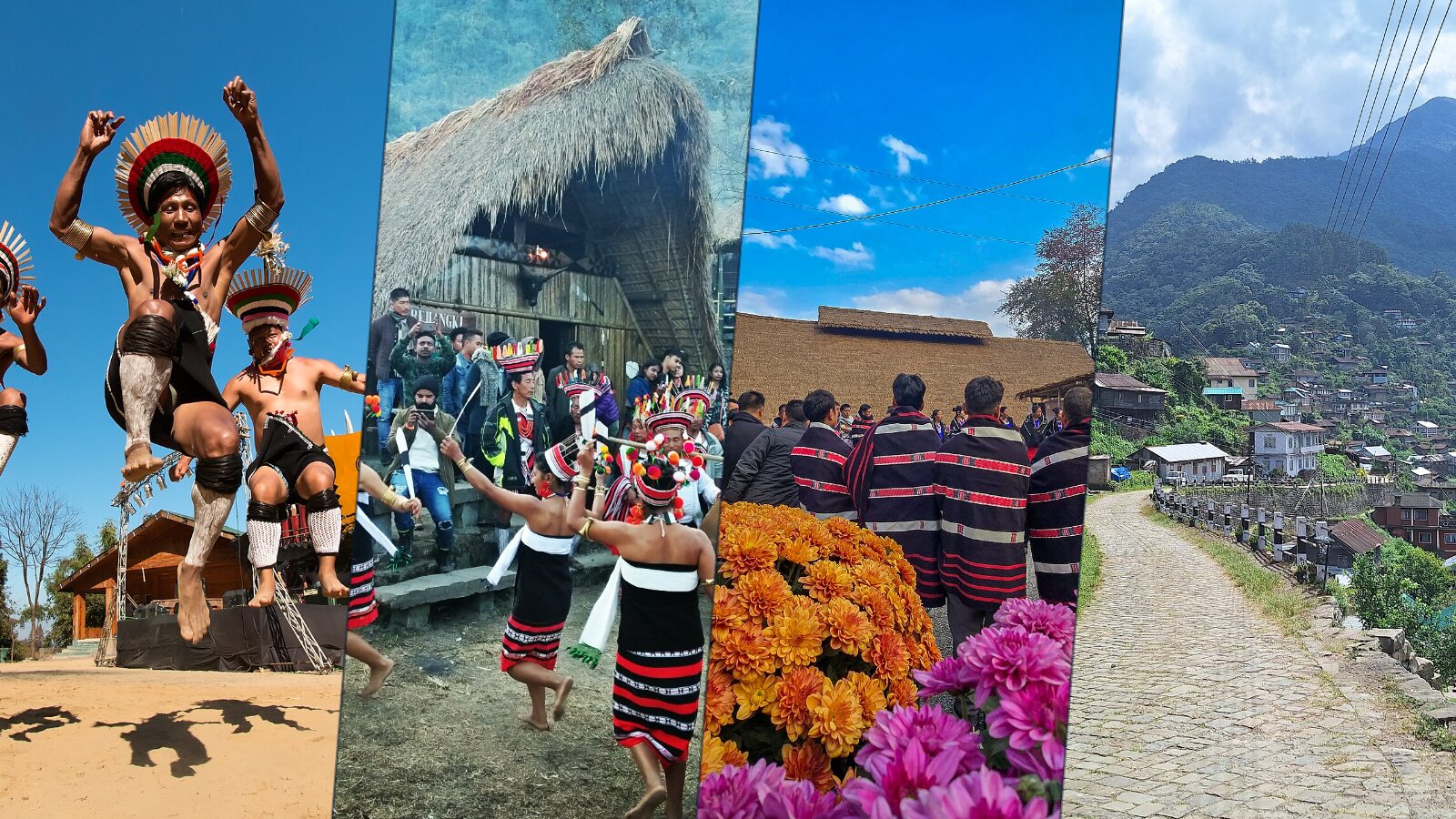
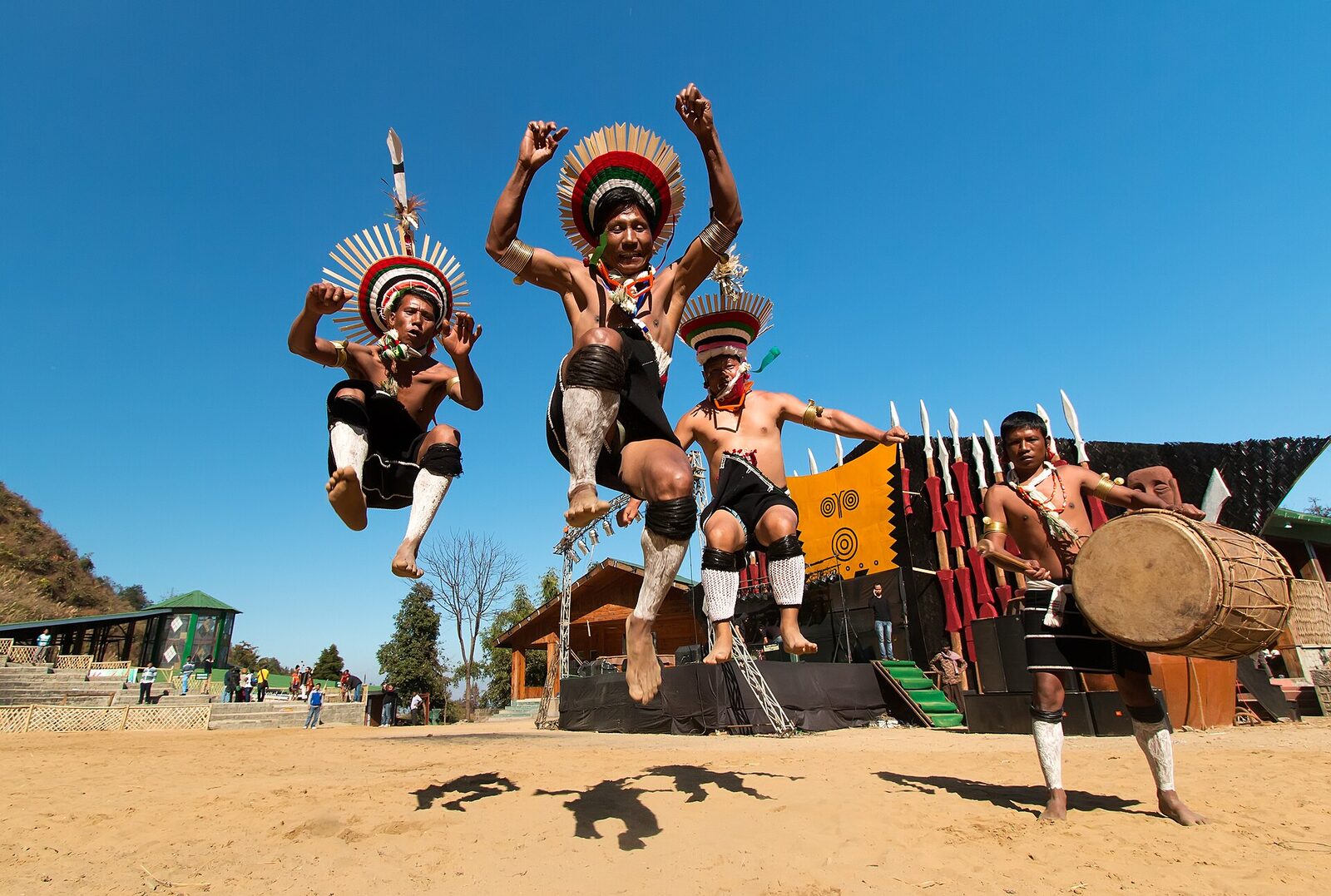
Every year from 1 to 10 December, the hills of Nagaland come alive with the Hornbill Festival, often called the festival of festivals. At Kisama Heritage Village, about 12 km from Kohima, Nagaland's tribes gather to share their dances, songs, games, crafts and food, each in front of its own traditional morung, or community house. Warriors in hornbill-feather headdresses, women in woven shawls, log drums, folk songs, archery, wrestling and chilli-eating contests fill the days, and music and night markets fill the evenings in Kohima.
The festival, first held in 2000, is named after the hornbill, a bird that appears in the folklore of almost every Naga tribe. This guide covers the Hornbill Festival 2026 dates, the permit you need, how to get there, where to stay, what to see and do, the villages and treks nearby, a five-day plan, what to eat and what to pack.
Hornbill Festival 2026 at a glance
| Dates | 1 to 10 December 2026 (the same every year) |
| Venue | Kisama Heritage Village, about 12 km from Kohima |
| Nearest airport and railhead | Dimapur, about 70 km from Kohima |
| Permit | Nagaland Inner Line Permit for Indian visitors |
| Entry | A small ticket at Kisama, with extra fees for some events |
| Weather | Cool to cold days, chilly nights |
The festival programme is published by Nagaland Tourism closer to the dates, so check the daily schedule before you go.
What happens at the Hornbill Festival
Each day at Kisama, the tribes perform in the main arena and around their morungs:
- Traditional dances and songs: war dances, harvest dances and folk songs, each tribe in its own dress, often with spears, shields and log drums.
- Morungs: traditional houses built by each tribe, where you can see crafts, tools, carvings and daily life, and taste local food.
- Indigenous games: traditional wrestling, archery, top-spinning and other games.
- Competitions: the famous king chilli (raja mircha) eating contest, and others that change from year to year.
- Crafts bazaar: woven shawls, bamboo and cane work, wood carvings, jewellery and more.
- Food stalls: smoked pork, bamboo shoot dishes, axone, sticky rice and much more.
In the evenings, Kohima has music concerts, including rock bands from across the Northeast and beyond, and a night bazaar with food and shopping. Events like a vintage car rally and a motor rally have also been part of the festival in many years.
The Nagaland Inner Line Permit
Indian visitors need a Nagaland Inner Line Permit (ILP), which can be applied for online on the state's ILP site before you travel. Carry printouts and ID. Foreign visitors usually need to register with the local authorities on arrival, under rules that have changed over the years, so check the latest requirements. Our guide to the Inner Line Permit in India explains the process.
How to get to Kohima
- By air: Dimapur airport, about 70 km from Kohima, has flights from Kolkata, Guwahati and some other cities. Guwahati has many more flights, and you can continue by road or train.
- By train: Dimapur is the nearest railway station, with trains from Guwahati, Kolkata and Delhi.
- By road: Dimapur to Kohima is about 70 km, usually two to three hours, on a winding hill road that has had long stretches of roadworks. Taxis and shared cabs run from Dimapur. Guwahati to Kohima is a long day's drive.
During the festival, shuttle services and taxis run between Kohima and Kisama, and traffic can be heavy, so leave early.
Where to stay
The biggest challenge of a Hornbill Festival trip is finding a room. Kohima has a limited number of hotels, and they fill up months before December.
| Option | Price a night | Good to know |
|---|---|---|
| Kohima hotels | about ₹1,500 to ₹4,000, more during the festival | Book months ahead |
| Village homestays in Kisama, Kigwema, Jakhama or Khonoma | about ₹1,200 to ₹3,000 | Close to the festival, with home food |
| Festival camps near Kisama | varies | Tents set up for the festival |
Book as early as you can, ideally by August or September. If Kohima is full, stay in a village homestay or camp, which is often the best experience anyway.
Kohima: more than the festival
- Kohima War Cemetery: on the slopes of the Garrison Hill, where the Battle of Kohima was fought in 1944, one of the turning points of the Second World War in Asia. The fighting reached the tennis court of the Deputy Commissioner's bungalow, still marked in the cemetery. The memorial carries the famous epitaph, "When you go home, tell them of us and say, for your tomorrow we gave our today."
- Kohima Cathedral: a large Catholic cathedral with a wooden cross and views over the town.
- Kohima Village: one of the largest villages in Asia, with traditional gates and houses.
- Nagaland State Museum: displays of Naga tribes, costumes, weapons and crafts.
- The local market: stalls selling vegetables, king chillies, bamboo shoots and, in some corners, edible insects and other local delicacies.
Khonoma and Dzukou Valley
Khonoma
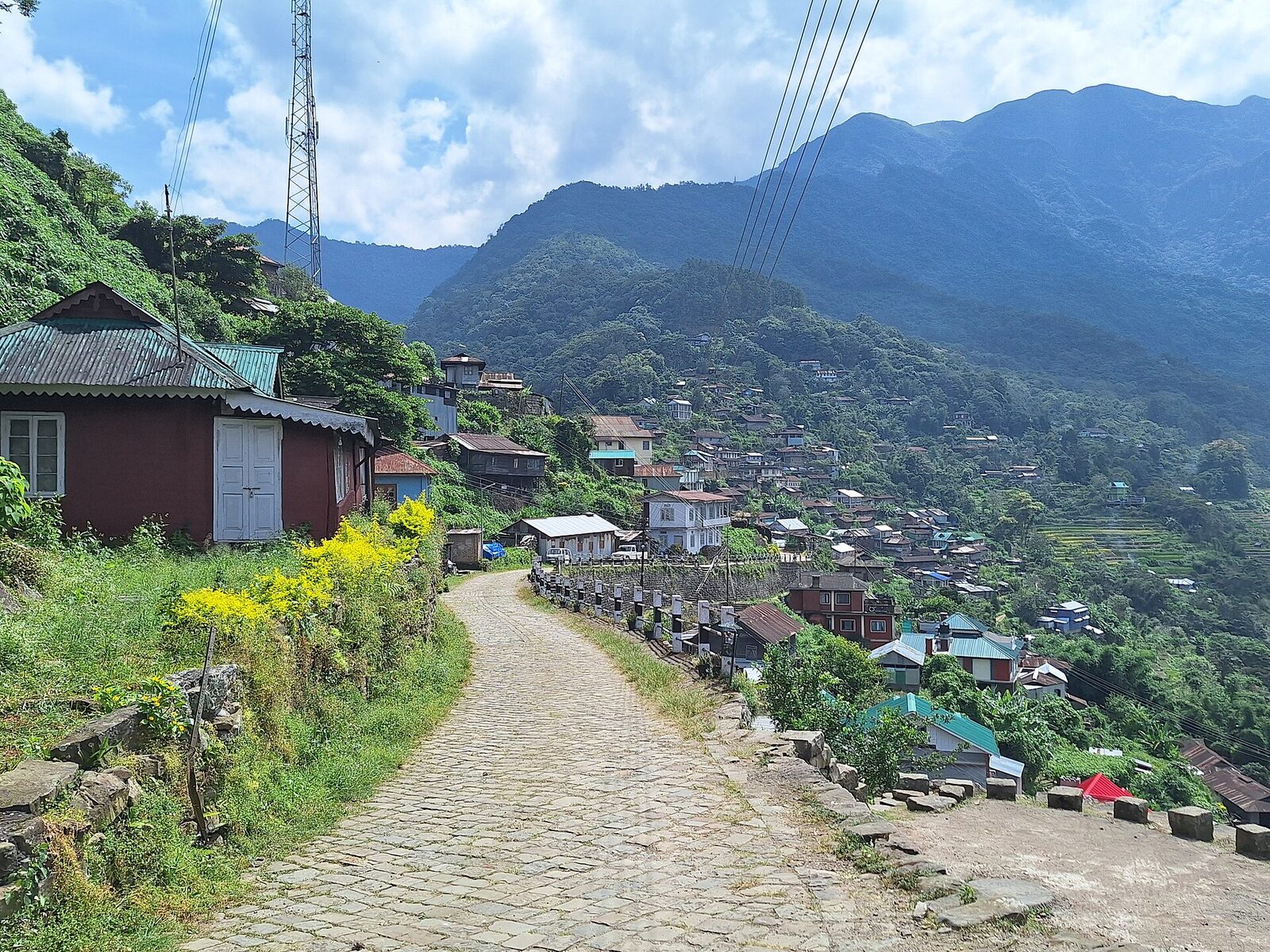
About 20 km from Kohima, Khonoma is an Angami village known as one of India's first green villages, where the community banned hunting and logging to protect its forests. It's famous for its terraced fields, stone houses and its fierce resistance to the British in the 19th century. Walk through the village with a local guide, and stay in a homestay if you can.
Dzukou Valley
The Dzukou Valley, on the border of Nagaland and Manipur, is a high valley of rolling green hills, streams and, in summer, lilies. The trek starts near Viswema or Zakhama, south of Kohima, with a steep climb of a few hours to the valley rim, then a walk into the valley. In December, it's cold and dry, with frost in the mornings, and the grass turns golden. You can do it as a long day hike or stay overnight in the basic rest house. Go with a guide, and carry warm layers, food and water.
A 5-day Hornbill Festival trip
| Day | Plan |
|---|---|
| 1 | Arrive in Dimapur, drive to Kohima |
| 2 | Hornbill Festival at Kisama all day, evening in Kohima's night bazaar |
| 3 | Kohima War Cemetery and the museum in the morning, Kisama in the afternoon, a concert in the evening |
| 4 | Khonoma village walk, or the Dzukou Valley trek |
| 5 | A last morning at Kisama, then back to Dimapur |
The first few days, including the opening on 1 December, are usually the busiest. The middle days are a little calmer.
What to eat at the Hornbill Festival
Naga food is one of the highlights of the festival. Try:
- Smoked pork with bamboo shoot: the classic Naga dish
- Axone: fermented soybean, cooked with pork or vegetables
- Anishi: fermented colocasia leaves, an Ao Naga speciality
- Galho: a comforting rice porridge with vegetables and meat
- King chilli chutney: made with the raja mircha, one of the hottest chillies in the world. Taste carefully.
- Sticky rice and local tea
Vegetarian food is available, but limited, so ask at the morungs and restaurants. Nagaland is officially a dry state, so follow local rules on alcohol.
What to pack
- Nagaland ILP printouts and ID
- Warm jacket, sweaters and a woollen cap for cold evenings
- Comfortable shoes for walking around Kisama's slopes
- A rain jacket, just in case
- A torch or headlamp for the evenings
- A power bank for your phone and camera
- Cash, as card machines and ATMs may not always work
Photography and etiquette
The Hornbill Festival is a wonderful place to photograph, but remember that the performers and visitors are people, not props.
- Ask before taking close-up photos of people, especially elders.
- Don't walk onto the performance area during dances.
- Respect the morungs: don't touch carvings or objects without permission.
- Buy from the craftspeople directly, which supports them.
- Dress modestly in the villages and churches.
Nagaland is a largely Christian state, and Sunday is a day of rest, when many shops and businesses close, though the festival continues.
Combining Hornbill with other places
Many travellers combine the festival with other parts of the Northeast:
- Kaziranga: about four to five hours from Dimapur, for rhinos and elephants. See our Kaziranga safari guide.
- Majuli: the river island in Assam, for its monasteries and culture.
- Meghalaya: for waterfalls, caves and living root bridges. See our Meghalaya trip plan.
- Imphal: Manipur's capital, often visited for the Sangai Festival in late November.
Our North East India trip guide has full routes.
What a Hornbill Festival trip costs
A rough guide for two people for five days, mid-range:
| Item | Approximate cost |
|---|---|
| Flights to Dimapur or Guwahati | varies by city and how early you book |
| Stay (4 nights, festival prices) | ₹10,000 to ₹25,000 |
| Taxis and shuttles | ₹6,000 to ₹12,000 |
| Festival tickets and permits | small fees |
| Food | ₹5,000 to ₹10,000 |
| Dzukou guide or Khonoma walk | ₹1,500 to ₹3,000 |
Booking flights and stays early is the biggest saving.
Common mistakes
- Booking stays too late. Kohima fills up months before December.
- Forgetting the ILP.
- Underestimating the road from Dimapur to Kohima, and missing events.
- Coming only for one day. Each day has different events.
- Packing for warm weather. December evenings in Kohima are cold.
- Photographing people without asking.
The Naga tribes and their morungs
Nagaland is home to many tribes, each with its own language, dress, festivals and traditions, including the Angami, Ao, Chakhesang, Chang, Konyak, Lotha, Phom, Pochury, Rengma, Sangtam, Sumi, Yimkhiung, Zeliang and others. You can often tell them apart by the colours and patterns of their woven shawls. At Kisama, each tribe builds or maintains its own morung, a traditional community house. In the past, the morung was where young men lived and learned the skills, songs and stories of their people, and it was the centre of village life. Visiting the morungs is the best way to understand the variety of Naga culture.
A day at Kisama
A typical festival day starts in the morning with an opening programme in the main arena, followed by performances by different tribes through the late morning and afternoon. Between performances, walk around the morungs, the crafts bazaar and the food stalls, and watch the traditional games. Arrive early for a good seat in the arena, as the stands fill up quickly, especially on the opening day and weekends. Afternoons end early, as it gets dark by around 4:30 pm in December, when many visitors head back to Kohima for the evening concerts and the night bazaar.
Tips for first-time visitors to the Northeast
- Plan around the early sunset. In December, it's dark by around 4:30 pm in Kohima, so start your days early.
- Carry cash, as card machines and ATMs may not work in the crowds.
- Allow extra travel time, as roads are winding and traffic is heavy during the festival.
- Respect local customs, especially on Sundays, a day of rest for many Naga Christians.
- Keep your ILP and ID handy, as they may be checked.
Getting around during the festival
Taxis and shared cabs run between Kohima and Kisama throughout the festival, and some years there are special shuttle buses. Traffic can be very heavy, so leave early in the morning, and agree on fares before you set off. Many visitors hire a taxi for the whole day, which also helps for trips to Khonoma and the War Cemetery.
The Hornbill Festival on a budget
Stay in a village homestay instead of a Kohima hotel, travel to Dimapur by train rather than plane, and use shared taxis between Dimapur, Kohima and Kisama. Eat at the festival's food stalls and local restaurants, which are good value, and book everything as early as possible, as last-minute prices are much higher. Our guide to how to plan a budget trip in India has more ways to save.
What to buy at the Hornbill Festival
- Naga shawls, woven in patterns that are different for each tribe
- Bamboo and cane crafts, from baskets to furniture
- Beaded jewellery and traditional ornaments
- Wood carvings and small sculptures
- King chilli pickles, sauces and dried chillies
- Local honey, tea and spices
The crafts bazaar at Kisama and the night bazaar in Kohima are the best places to shop. Buying directly from the makers supports Naga artisans.
The Hornbill Festival with children and older parents
The festival is a great experience for children, with colourful costumes, music and games. Keep them close in the crowds, and carry warm clothes for the evenings. For older parents, Kisama's slopes and steps can be tiring, so choose seats in the main arena, take breaks and avoid the busiest days. Stay close to Kisama to cut down on travel time.
Plan your Hornbill Festival trip with JrnyLoop
Tell JrnyLoop your dates and that you're going to Kohima for the Hornbill Festival, and it plans the trip with realistic drive times from Dimapur, festival days at Kisama, the War Cemetery, Khonoma and Dzukou, and a budget for your group. It can also add Kaziranga or Meghalaya to the route, and remind you about the ILP.
The short version
The Hornbill Festival runs every year from 1 to 10 December at Kisama Heritage Village near Kohima. Get your Nagaland ILP online, book your stay months ahead, fly or take a train to Dimapur and give yourself four or five days: two or three at Kisama for the dances, games and food, a morning at the Kohima War Cemetery, and a day at Khonoma or the Dzukou Valley. Pack warm clothes, ask before taking photos, and try the smoked pork and king chilli.


Comments