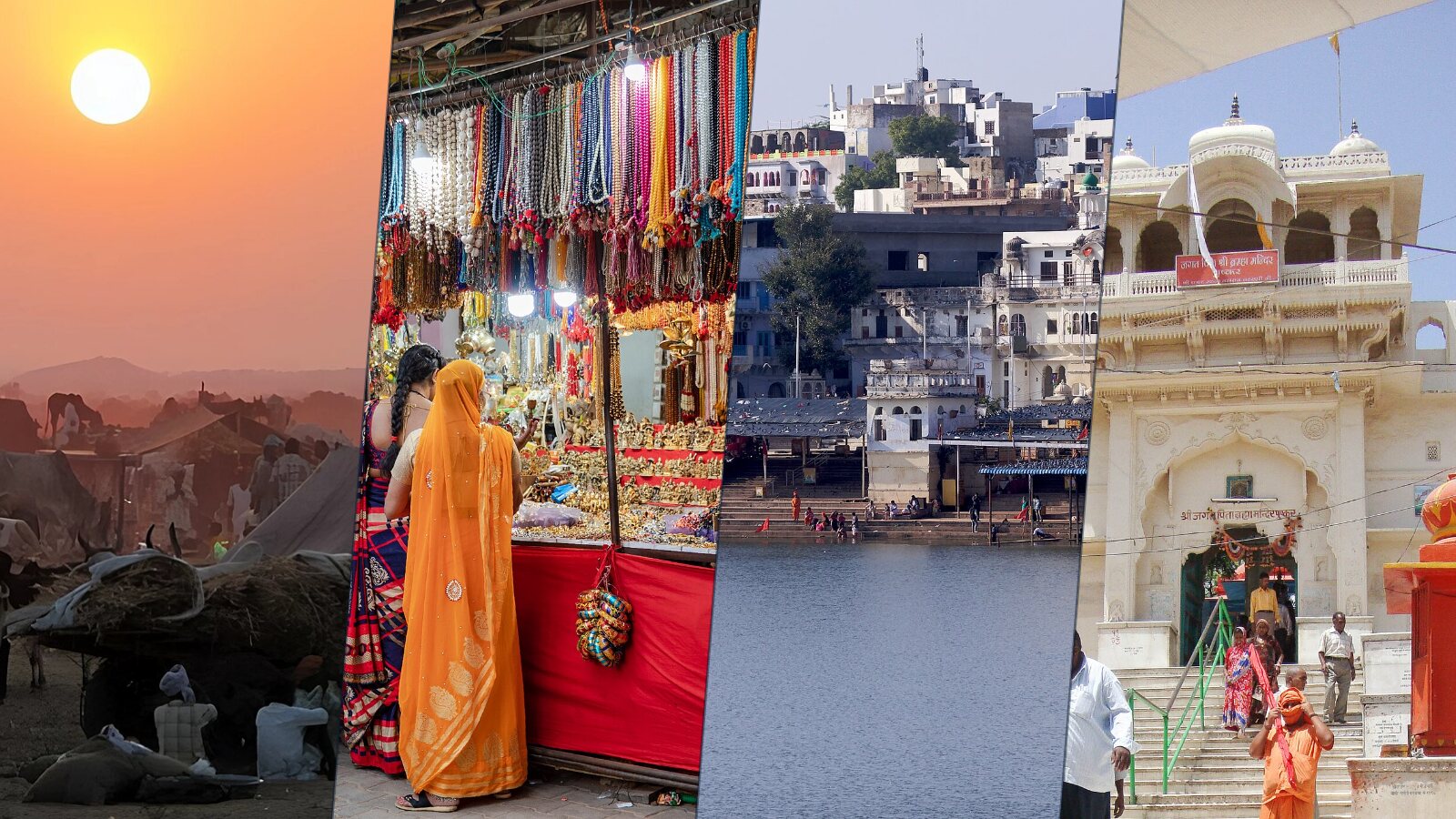
Once a year, around the full moon of the Hindu month of Kartik, the small holy town of Pushkar in Rajasthan becomes one of the most extraordinary sights in India. The Pushkar Mela, or Pushkar Camel Fair, brings thousands of camels, horses and cattle to the dunes outside town for trading, along with herders from across Rajasthan in bright turbans, folk musicians, acrobats, a giant fairground and, at the end, lakhs of pilgrims who come to bathe in the sacred lake on Kartik Purnima.
This guide covers the expected dates of the Pushkar Mela in 2026, what happens during the fair, where to stay, the temples and ghats, a three-day plan, how to get there, the town's rules, the scams to avoid, what to eat and what it costs.
When is the Pushkar Mela in 2026?
The Pushkar Mela follows the Hindu calendar and ends on Kartik Purnima, the full moon of Kartik. In 2026, Kartik Purnima falls in late November, around 24 November, so the fair is expected to run through the second half of November, with the livestock trading starting several days before the main religious days.
The rough pattern of the fair:
| Phase | What happens |
|---|---|
| The first days | Herders arrive with their camels and cattle, and trading begins on the dunes. This is the best time for the camel fair itself. |
| The middle days | The official programme of competitions, folk performances and cultural evenings runs at the mela ground. |
| The last days, up to Kartik Purnima | The religious part of the fair: pilgrims arrive in huge numbers to bathe in the lake, and the town is at its most crowded. |
Rajasthan Tourism announces the official programme closer to the dates, so check it before you book.
What happens at the Pushkar Mela
The camel and cattle fair
On the dunes west of town, thousands of camels, horses and cattle are bought and sold, with herders camping beside their animals. Come at dawn, when smoke from the cooking fires drifts over the dunes and the camels are being fed and groomed, for the most beautiful light and atmosphere. The trading is real business, so be respectful, and ask before taking close-up photos of people.
Competitions and performances
During the official programme, the mela ground hosts events that change from year to year, but often include:
- Camel races and camel dances
- The longest moustache competition
- Turban-tying contests, often with visitors joining in
- Matka phod, a pot-breaking game
- Tug of war between locals and visitors
- Folk music and dance by Rajasthani performers in the evenings
The fairground
Next to the dunes, a huge fairground springs up with Ferris wheels, stalls selling everything from bangles to camel decorations, and food stalls. It's lively, noisy and great fun in the evening.
Kartik Purnima
On the last days of the fair, especially Kartik Ekadashi to Kartik Purnima, the focus shifts to the lake, as pilgrims come to bathe in its sacred water and offer prayers at the ghats and the Brahma Temple. The ghats are packed, and the evening aarti with floating lamps is very moving.
Pushkar beyond the fair
Pushkar Lake and the ghats
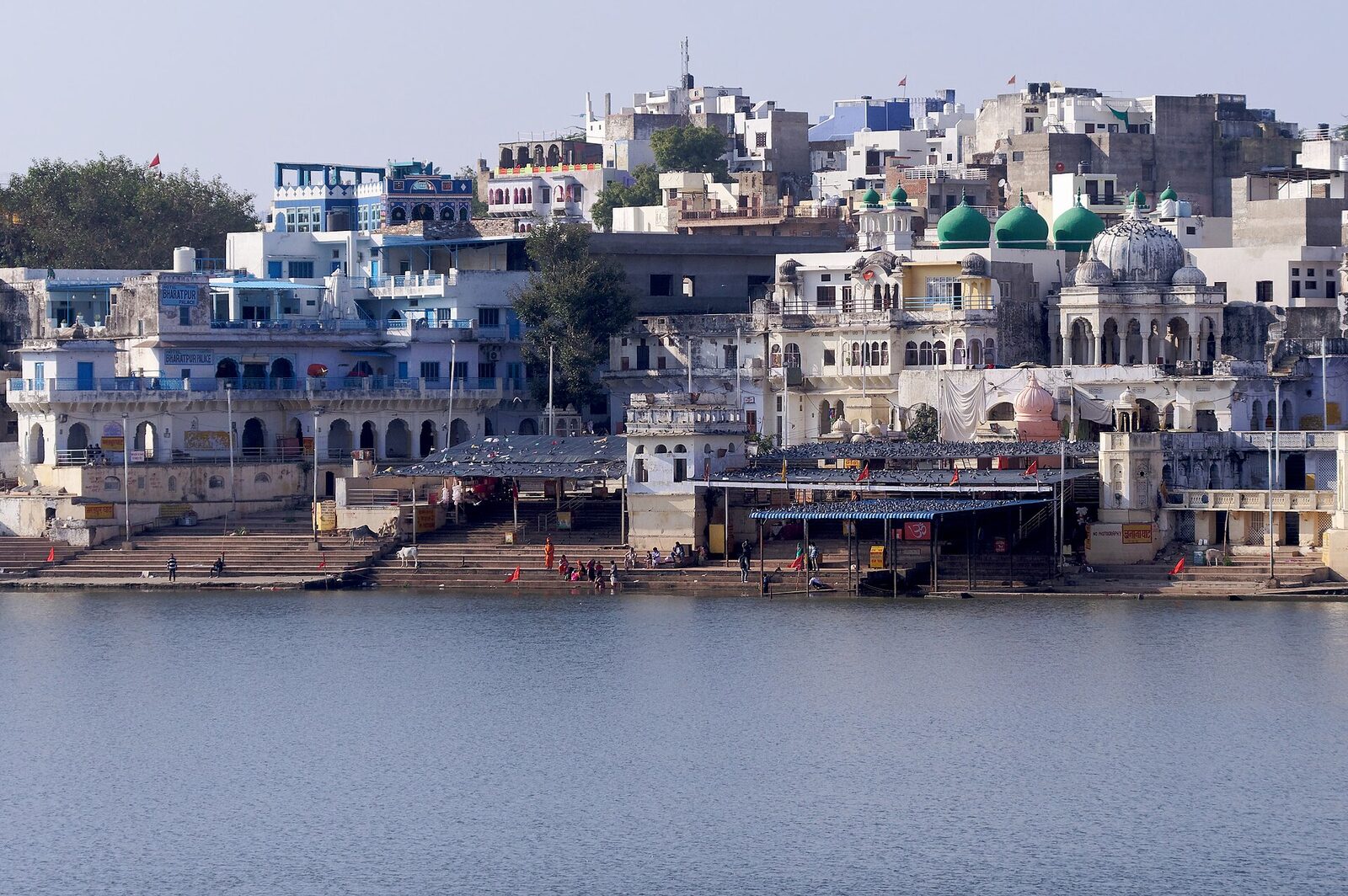
Pushkar Lake, surrounded by 52 ghats and hundreds of temples, is one of the holiest lakes in India. Legend says it formed where a lotus fell from the hand of Lord Brahma. Walk around the lake in the early morning, watch the sunset from Gau Ghat or Varaha Ghat, and listen to the drumming in the evening. Remove your shoes before stepping onto the ghats, and don't photograph people bathing.
The Brahma Temple
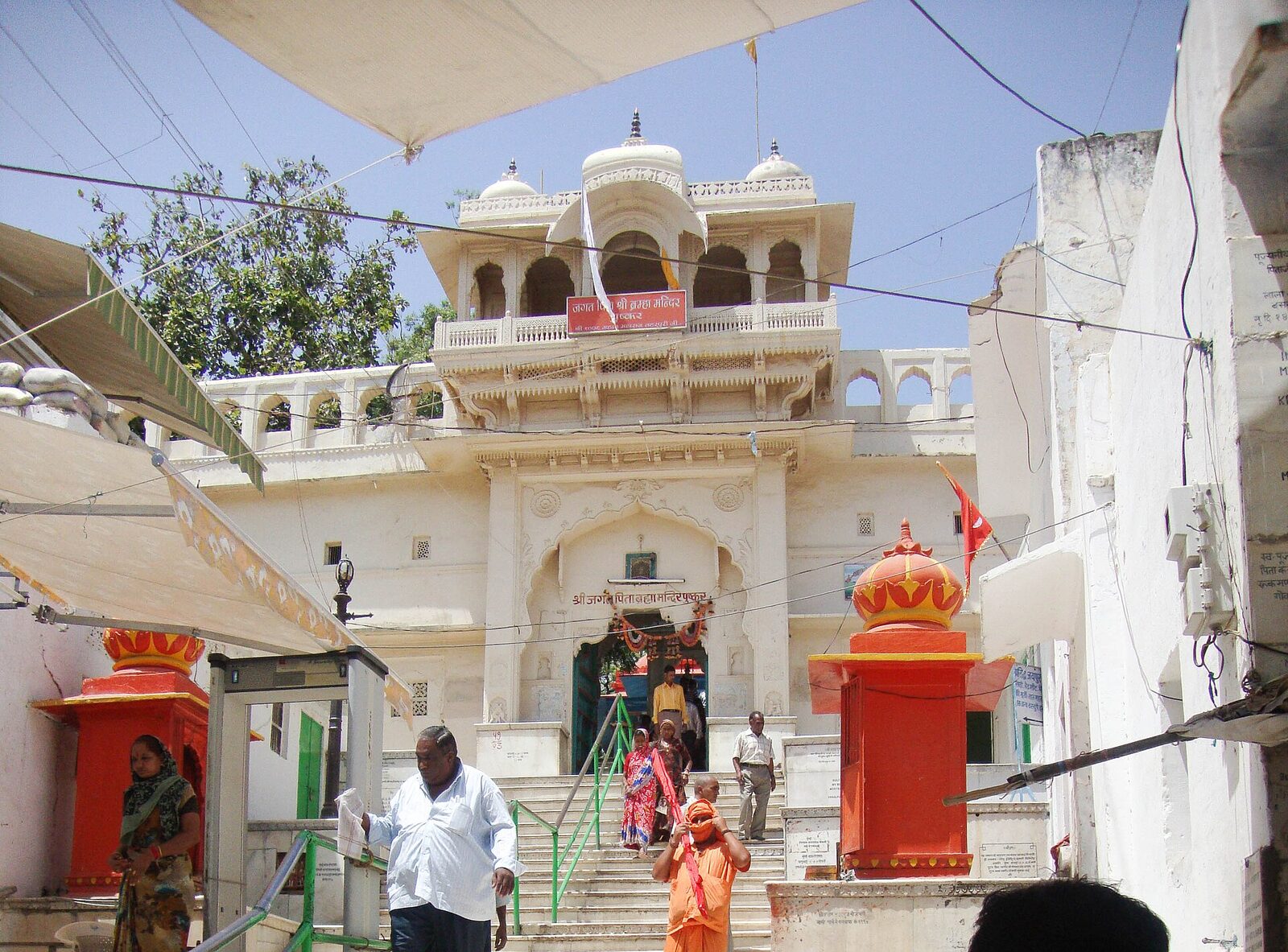
The Brahma Temple is one of very few temples in the world dedicated to Brahma, the creator, recognised by its red spire. It's busiest during the mela. Phones and cameras may not be allowed inside, so check at the entrance.
Savitri and Gayatri temples
On a hill south of the lake, the Savitri Mata Temple, dedicated to Brahma's wife, is reached by a ropeway or a steep climb, with wide views over the town, the lake and the desert, especially at sunrise. On the opposite side, the Pap Mochani (Gayatri) Temple is a shorter climb, good for sunset.
Ajmer Sharif
About 15 km away, Ajmer has the Dargah of Khwaja Moinuddin Chishti, one of the most important Sufi shrines in South Asia, visited by people of all faiths. Thursday evenings bring qawwali. Ajmer also has the Ana Sagar lake and the Adhai Din Ka Jhonpra, a 12th-century mosque with beautiful carved pillars. Cover your head at the dargah, and dress modestly.
A 3-day Pushkar Mela trip
| Day | Morning | Afternoon | Evening |
|---|---|---|---|
| 1 | Dawn at the camel fair on the dunes | Rest, then a walk around the lake and the bazaar | Sunset at the ghats and the evening aarti |
| 2 | Savitri Temple at sunrise by ropeway, then the Brahma Temple | Competitions at the mela ground | Folk performances, the fairground, or a camel ride into the dunes |
| 3 | The camel fair again at dawn | Day trip to Ajmer Sharif | Back to Pushkar, or onward to Jaipur |
If you want both the camel trading and the religious festival, plan to arrive early in the fair and stay until a day or two before Kartik Purnima, or come for the final days separately.
How to get to Pushkar
- By road from Jaipur: about 145 km, around 2¾ hours on JrnyLoop's estimate.
- By road from Delhi: about 420 km, around 7¾ hours.
- By train: Ajmer Junction, about 15 km away, has trains from Delhi, Jaipur, Mumbai and other cities, including fast day trains. Pushkar has a small station with very few trains.
- By air: Kishangarh airport, about 45 km away, has a few flights, and Jaipur airport has many more.
Taxis and buses run between Ajmer and Pushkar over the Nag Pahar hills. During the fair, traffic into Pushkar is heavy, so leave extra time.
Where to stay during the Pushkar Mela
Rooms in Pushkar fill up months before the fair, and prices can triple. Book as early as you can.
| Option | Price a night (normal times) | Good to know |
|---|---|---|
| Guesthouses around the lake | about ₹700 to ₹2,500 | Walk to the ghats and the bazaar; prices rise sharply during the mela |
| Desert camps (Ganahera and around the fair) | about ₹2,500 to ₹6,000 | Tents with meals and folk shows, many set up just for the fair |
| Heritage resorts on the Pushkar to Ajmer road | about ₹5,000 to ₹15,000 | Pools and comfort, a drive from the fair |
Read recent reviews of temporary camps carefully, and check what's included: bathrooms, hot water, heating, meals and transport to the fair. Nights in late November are cool.
Pushkar's rules
Pushkar is a holy town, and a few rules apply:
- It's vegetarian: meat and eggs aren't sold in town.
- Alcohol isn't allowed in Pushkar.
- Remove your shoes before stepping onto the ghats.
- Don't photograph people bathing at the ghats.
- Dress modestly, especially near the temples and the lake.
Scams to avoid
- "Flower puja" at the ghats: someone gives you flowers and leads you through a prayer at the lake, then demands a large "donation" for your family. Politely refuse the flowers, or agree on any donation before you start.
- The "Pushkar passport": a red thread tied on your wrist after a puja, which some people use to show they've already paid. You don't need one.
- Overpriced camel rides: agree on the price and the length of the ride before you get on.
- Photo tips: some people in costume ask for money after you take their photo. Ask first, and agree on a tip.
What to eat in Pushkar
- Malpua: syrupy fried pancakes, made fresh in the bazaar
- Kachori and jalebi for breakfast
- Dal baati churma at the thali places
- Lassi, thick and cold
- Falafel, hummus and shakshuka at the rooftop cafés, a legacy of decades of Israeli travellers
- Rooftop café meals with views of the lake
Shopping in Pushkar
The main bazaar is full of silver jewellery, colourful textiles, embroidered bags, leather goods, musical instruments and clothes. During the mela, the fairground sells camel decorations, bangles and crafts from across Rajasthan. Bargain politely, and compare a few shops first.
What a Pushkar Mela trip costs
A rough guide for two people for three days, mid-range, during the fair:
| Item | Approximate cost |
|---|---|
| Stay (3 nights, mela prices) | ₹10,000 to ₹30,000 |
| Train to Ajmer or a car from Jaipur | ₹2,000 to ₹6,000 |
| Local transport and the Ajmer day trip | ₹1,500 to ₹3,000 |
| Ropeway, camel ride and extras | ₹1,000 to ₹3,000 |
| Food | ₹3,000 to ₹5,000 |
Outside the fair, Pushkar is one of the cheapest towns in Rajasthan.
Photography tips
- Be on the dunes at dawn and at sunset for the best light over the camels.
- Ask before photographing people, especially women and herders, and respect a no.
- Don't photograph bathers at the ghats.
- Protect your camera from the dust with a cover or plastic bag.
- Keep your gear close in the crowds.
Pushkar Mela with family
The fair is fun for families, with camel rides, the fairground and the competitions. Plan the dunes for the early morning, when it's cool and less crowded, and keep children close at the ghats and in the crowds near Kartik Purnima. With older parents, choose a hotel close to the lake, use autos, and avoid the last days of the fair, which are the most crowded.
Common mistakes
- Booking late, and finding everything full or very expensive.
- Arriving only for Kartik Purnima and missing the camel trading, which happens earlier.
- Falling for the flower puja at the ghats.
- Choosing a camp without checking reviews.
- Forgetting warm clothes for cool November nights.
- Bringing alcohol or non-vegetarian food into town.
The legends of Pushkar
According to legend, Lord Brahma dropped a lotus flower on the earth, and where its petals fell, lakes appeared, the largest of them Pushkar Lake. Brahma decided to perform a great yagna here, but his wife Savitri was late. To finish the ritual at the right time, Brahma married a local girl, Gayatri. Savitri, furious, cursed Brahma that he would be worshipped only at Pushkar, which is said to be why there are so few Brahma temples anywhere else. Savitri's temple stands on one hill above the town, and Gayatri's on the other. Pushkar is also linked to many sages, and Guru Gobind Singh is said to have visited, with a ghat named after him.
Pushkar outside the fair
If you can't make the mela, Pushkar is a lovely place to visit from October to March, when it's calm, cheap and full of cafés. Walk the ghats at sunrise and sunset, listen to the evening drumming, climb to the Savitri Temple, shop in the bazaar and take a short camel ride into the dunes. It's also an easy weekend from Jaipur, and combines well with Ajmer.
Getting around Pushkar
Pushkar is small and best explored on foot, though the bazaar is narrow and crowded during the fair. Autos and e-rickshaws run to the mela ground, the ropeway and the desert camps, and taxis and buses link Pushkar with Ajmer. During the fair, roads into town are often closed to cars at peak times, so you may need to park outside and walk.
Desert camps and hot air balloons
During the fair, temporary desert camps spring up around Pushkar, from simple tents to luxury camps with private bathrooms, meals and folk performances. In some years, hot air balloon rides are offered over the dunes and the fair at dawn, depending on the weather and permissions. If you book one, choose a licensed operator, and be ready for cancellations if the wind is too strong.
The Pushkar Mela on a budget
Stay in a simple guesthouse in the old town instead of a camp, travel by train to Ajmer and take a local bus to Pushkar, and walk to the fair. Eat at the bazaar's food stalls and thali places, and enjoy the free parts of the mela: the camel trading at dawn, the ghats and the competitions. Book early, as even budget rooms fill up and get expensive close to the dates.
The Pushkar Mela with friends or solo
The Pushkar Mela is one of the best festivals in India to experience with friends or on your own. Pushkar's guesthouses and rooftop cafés are full of travellers, and it's easy to find company for dawn visits to the dunes or a camel ride. Solo travellers should choose well-reviewed guesthouses close to the lake, keep their belongings close in the crowds, and avoid isolated parts of the dunes after dark. Women travelling alone should dress modestly and stay in busy areas. Our guide to solo travel in India has more tips.
Plan your Pushkar Mela trip with JrnyLoop
Tell JrnyLoop your dates and that you're going to Pushkar, and it plans your Pushkar Mela trip with realistic drive times from Jaipur or Delhi, dawn at the camel fair, sunset at the ghats, Savitri Temple and Ajmer Sharif, and a budget for your group, including mela-time stays. It can also add Jaipur, Jodhpur or Udaipur for a longer trip.
See our guides to places to visit in Jaipur, the Rajasthan itinerary and weekend getaways from Jaipur.
The short version
The Pushkar Mela 2026 is expected in the second half of November, ending on Kartik Purnima around 24 November. Come early in the fair for the camel trading at dawn, stay for the competitions and folk evenings, and add the ghats, the Brahma Temple, Savitri Temple and Ajmer Sharif. Book months ahead, read camp reviews carefully, respect the town's vegetarian and no-alcohol rules, and politely refuse the flower puja.


Comments