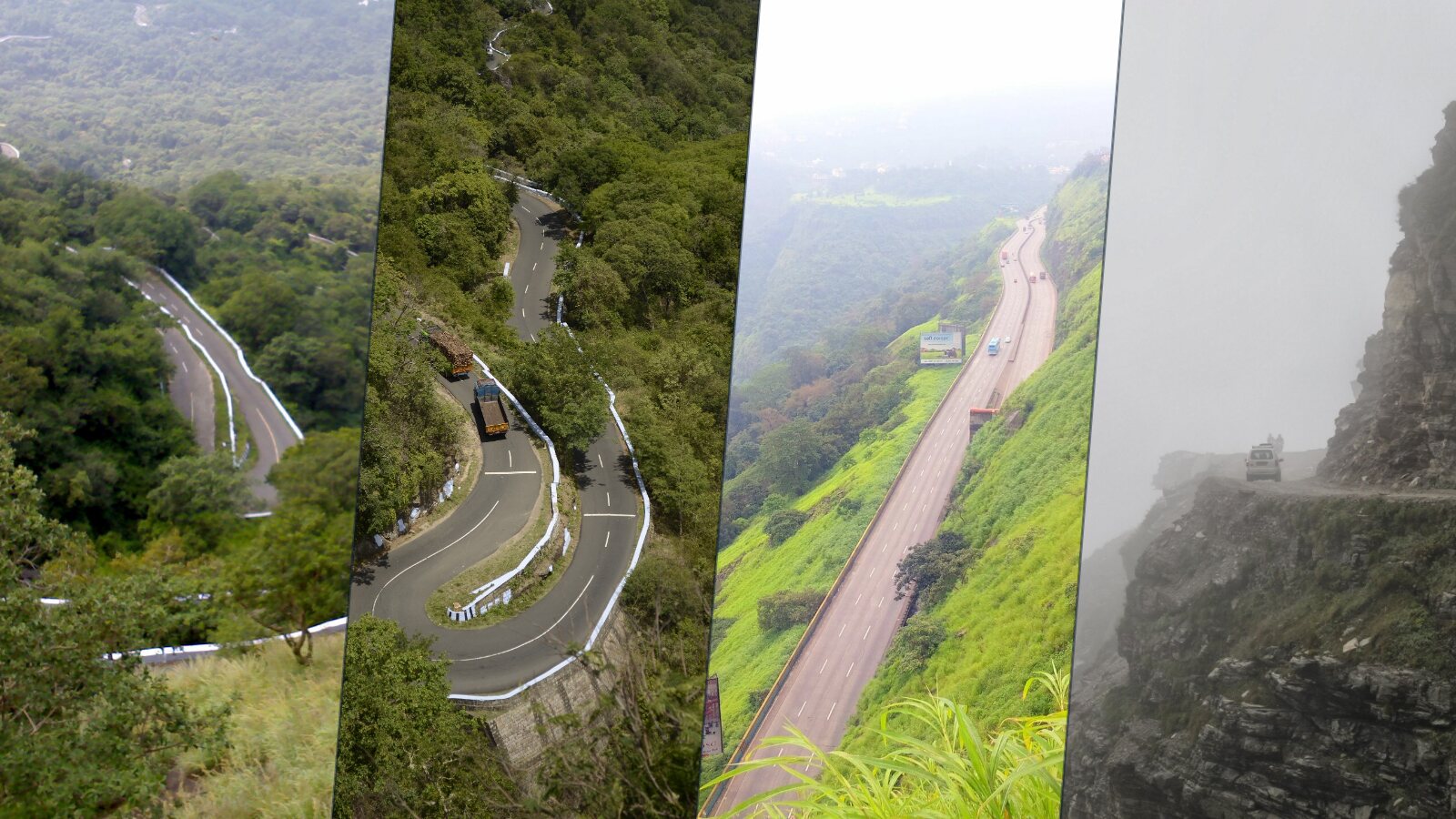
Sooner or later, every road trip in India climbs a ghat. The Western Ghats on the way to Goa, Mahabaleshwar or Munnar, the 36 hairpin bends up to Ooty, the long climb from Kalka to Shimla, or the passes of the Himalaya: hill roads are where the best views are, and where most drivers feel least sure of themselves. But ghat road driving isn't difficult once you understand a few things: which gear to use, how to take a hairpin, who gives way to whom, and why your brakes are not the right tool for going downhill. This guide covers all of it, plus fog, monsoon landslides, snow, and the checks your car needs before a hill trip.
Before ghat road driving: get the car ready
Hill roads are hard on a car, especially the brakes, the cooling system and the tyres. Before a ghat trip:
- Brakes: have the pads and fluid checked if they're due. Brakes are your last line of defence on a descent.
- Tyres: good tread, correct pressure (checked cold) and a usable spare.
- Coolant and engine oil: topped up. Long climbs heat the engine.
- Wipers and washer fluid: essential in monsoon rain and fog.
- All lights working, including fog lamps if you have them.
- Clutch: a slipping clutch will struggle on steep climbs.
Carry a jack, a wheel spanner, a tow rope, a torch, water and some snacks. Mountain roads can be blocked for hours.
Going up: the climb
1. Pick a gear and stay in it
On a steep climb, choose a gear that lets the engine pull without straining, usually second or third, and stay in it. Changing gears halfway up a steep hairpin loses momentum and can stall the car.
2. Don't let the engine labour
If the engine sounds like it's struggling, shift down a gear. Lugging the engine in too high a gear overheats it and wears the clutch.
3. Uphill traffic has the right of way
On narrow ghat roads, a vehicle coming uphill has the right of way, because it's much harder to restart on a slope. If you're coming down and the road is too narrow for two, stop in a wider spot and let the climbing vehicle pass.
4. Watch the temperature gauge
On long climbs in summer, keep an eye on the temperature gauge. If it rises toward the red, pull over safely, let the engine idle for a minute, then switch off and let it cool. Never open a hot radiator cap.
5. Use the handbrake on hill starts
If you have to stop on a steep slope, hold the car on the handbrake, then release it as the clutch bites. Many newer cars have hill-start assist, but know how to do it without.
Coming down: where most accidents happen
6. Use the engine to slow you, not the brakes
This is the single most important ghat road driving rule. Going downhill, stay in a low gear, generally the same gear you'd use to climb that slope, and let the engine hold the car back. This is engine braking. Use the brakes only to adjust your speed, in short, firm presses.
7. Never ride the brakes
Keeping your foot on the brake pedal all the way down a long descent overheats the brakes until they stop working properly, which is called brake fade. If you can smell burning or the pedal feels soft, pull over and let the brakes cool for 15 to 20 minutes.
8. Never coast in neutral
Coasting downhill in neutral, or with the clutch pressed, leaves you with only your brakes and no engine braking. It's dangerous and it wastes the brakes.
9. Slow down before the bend, not in it
Brake in a straight line before a bend, then take the bend at a steady speed. Braking hard in the middle of a curve, especially downhill, can make the car slide.
Hairpins and blind bends
10. Stay in your lane on hairpins
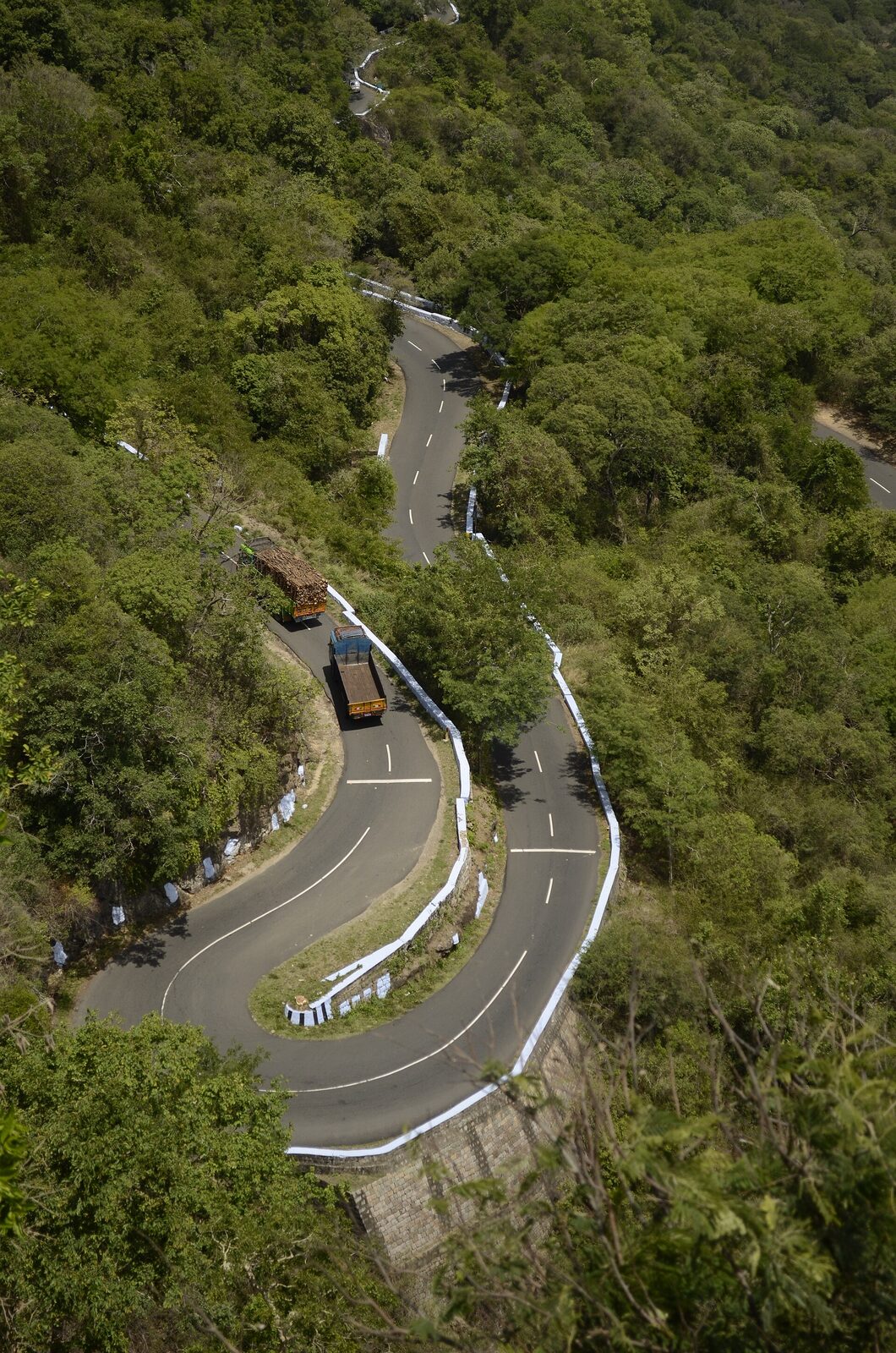
On a tight hairpin, it's tempting to cut the corner. Don't: a bus or truck may be coming the other way and needs all of its side of the road. Keep left and take the bend wide enough to stay in your lane.
11. Give way to buses and trucks on hairpins
Big vehicles need the whole width of the road to get round a tight hairpin. If you see one starting the turn, stop before the bend and let it through.
12. Use your horn on blind bends
On narrow hill roads, a short horn before a blind bend tells oncoming traffic you're there. At night, flash your headlights instead.
13. Never overtake on a bend or a crest
Overtake only on a straight stretch where you can see far enough ahead. Many hill roads have solid lines for a reason.
Fog, rain and landslides
14. In fog, slow down and use low beam
High beam reflects off fog and blinds you. Use low beam and fog lamps, slow right down, and follow the left edge of the road. If visibility drops to a few metres, pull well off the road, switch on hazard lights and wait.
15. In the monsoon, drive only in daylight
Heavy rain loosens slopes, and landslides are common on ghat roads from June to September. Drive only in daylight, don't stop under overhanging rock or loose slopes, and turn back if water is flowing across the road.
16. Check road status before you leave
Before a monsoon or winter hill drive, check for road closures, from local news, the police or your hotel. A blocked road can mean a long detour or a night somewhere unplanned. Keep a spare day.
Snow and ice
17. Fit chains or hire a local
After snowfall, the police often allow only 4x4 vehicles or cars with snow chains on the roads to places like Solang, the Atal Tunnel or Gulmarg. If you've never driven on snow, hire a local driver or a 4x4 taxi for that stretch. Our guide to snowfall places in India lists where this usually applies.
18. Watch for black ice
In the early morning and after sunset, wet patches can freeze into invisible black ice, especially in shaded bends. Drive very gently, with no sudden steering, braking or acceleration.
Automatic, CNG and electric cars
19. Use manual mode or a low gear in an automatic
Automatic cars can hunt between gears on climbs and freewheel on descents. Use the L, 2 or manual mode (or the paddle shifters) to hold a low gear going down, so the engine still brakes for you.
CNG cars lose some power on steep climbs. Many drivers switch to petrol for long, steep ghats.
Electric cars handle ghats well, and regenerative braking recovers energy on the way down, but range drops sharply on long climbs. Plan charging stops before you head into the hills, since chargers are still scarce on many mountain roads.
You and your passengers
20. Take breaks and avoid night driving
Hill driving is tiring because you're concentrating all the time. Stop every hour or two, and plan to finish driving before dark, when bends, animals and unlit trucks are much harder to judge.
Motion sickness: passengers who get sick should sit in front, look at the horizon, avoid reading or screens, and eat lightly before the drive. Smooth driving helps more than anything.
High altitude: above about 2,500 m, the air is thinner. Climb gradually, drink plenty of water, and read our guide to altitude sickness before driving to Ladakh or Spiti.
If something goes wrong on a ghat
The engine overheats: pull over where it's safe and wide, switch on hazard lights and let the engine idle for a minute before switching off. Wait until it cools before checking the coolant.
A puncture on a bend: don't stop on the bend itself. Drive slowly to the next straight, wide section, even on a flat, before changing the tyre. Place a warning triangle well behind the car.
A landslide or blocked road ahead: stop well back, never drive under a slope that is still shedding stones, and follow police or local instructions. Turn back if you need to.
Stuck behind a slow truck: be patient. Wait for a long, clear straight, or for the truck driver to wave you past, and never overtake on a blind bend.
An accident or breakdown: call 112, India's emergency number, or the national highway helpline 1033 on national highways. Note the nearest kilometre stone or landmark to tell them where you are.
Keep a torch, a reflective triangle, water, a tow rope and a basic first aid kit in the car whenever you drive in the hills.
India's best-known ghat roads
- Kalhatti ghat, Ooty: 36 hairpins, very steep. See our Bangalore to Ooty guide.
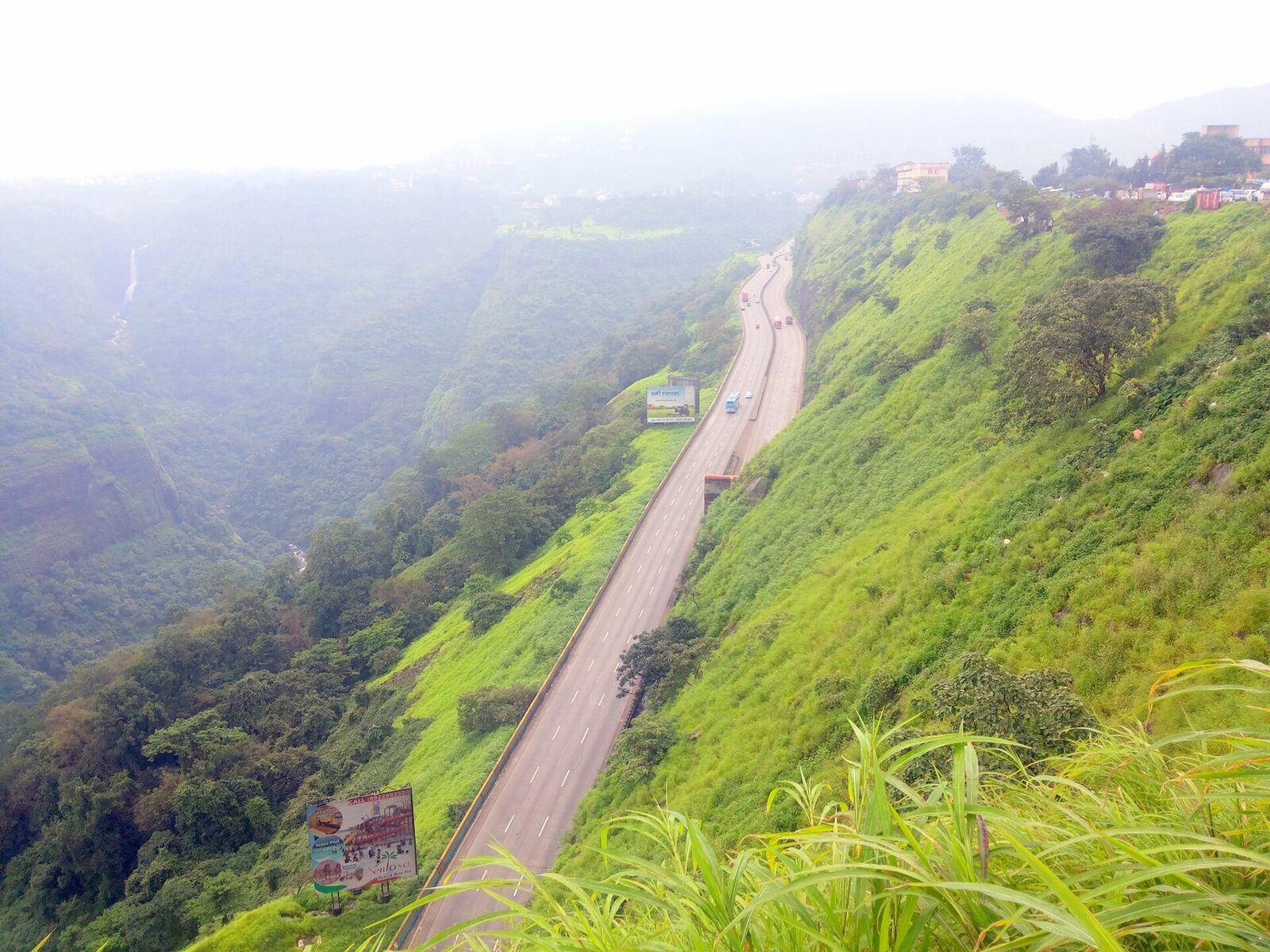
- Mumbai–Pune Expressway, Khandala ghat: busy and fast, with heavy trucks
- Amboli and Phonda ghats: the climbs from the Konkan to Kolhapur. See our Mumbai to Goa road trip.
- Munnar and Thekkady roads, Kerala: narrow and busy with buses. See our Kerala itinerary.
- Kalka to Shimla, and the Kullu–Manali road: long climbs with heavy weekend traffic
- Zoji La, Baralacha La and Tanglang La: the high passes on the roads into Ladakh
Driving the Western Ghats vs the Himalaya
The Western Ghats (the Sahyadris, Nilgiris and Kerala's hills) have shorter but often steeper climbs, many hairpin bends, thick fog and very heavy rain in the monsoon, and roads busy with buses and trucks. The Himalaya has much longer climbs, high passes, rough and unpaved stretches, water crossings, snow and ice, and the added challenge of altitude for both drivers and engines. Both need the same basic technique: low gears, patience and daylight driving.
Hill roads and your engine
At high altitude, the air is thinner, and engines, especially older non-turbo ones, lose power. Expect to use lower gears than usual on climbs above 3,000 m. Diesel can thicken in extreme cold, so in winter, fill up with winter-grade fuel in the hills and park in the sun where possible. If your car has a turbo, let the engine idle for a minute after a long climb before switching off.
Driving with a local driver
On unfamiliar mountain roads, a local driver who knows the bends, the landslide spots and the timings is worth every rupee. In places like Ladakh, Sikkim and parts of Uttarakhand, local taxis or registered vehicles are required or strongly recommended anyway. Agree the rate per day, including the driver's food and stay, and whether fuel and tolls are included, before you start.
A ghat road checklist
- Brakes, tyres and coolant checked before the trip
- Spare tyre, jack and puncture kit
- Torch, reflective triangle and tow rope
- Water, snacks and motion sickness medicine
- Offline maps, as signal drops in the ghats
- Snow chains in winter, for the high hills
- Road status checked that morning
Common mistakes on ghat roads
- Riding the brakes downhill until they fade.
- Overtaking on blind bends or crests.
- Stopping on a hairpin to take photos.
- Driving into fog with high beams on.
- Starting a long hill drive late in the afternoon.
- Trusting a mapping app that suggests a narrow shortcut through the hills.
Ghat roads at night
Avoid driving ghat roads after dark if you can. Visibility is poor, many stretches have no lights or barriers, and fog often sets in on the higher sections. Trucks and buses also drive at night, and their high beams on blind bends can dazzle you. If you must drive at night, slow right down, use your low beam on bends and when another vehicle comes, honk before blind corners, and stop for the night if fog closes in. Plan your day so you reach the top or the bottom of the ghat before sunset.
Sharing the road with buses and trucks
- Give way to buses and trucks going uphill. They find it hard to restart on a slope.
- Don't overtake on bends, even if the vehicle in front is slow. Wait for a straight stretch with a clear view.
- Leave space behind trucks, which can roll back when they stop on a slope.
- Watch for buses taking the whole road on hairpins. Slow down, and pull to the side if needed.
- Use your horn to signal before blind bends, not to hurry anyone.
Stopping and parking on a ghat
Stop only at viewpoints, lay-bys or dhabas, never on a bend or in the middle of a narrow stretch. Park facing uphill or downhill with the handbrake on and a gear engaged, and turn the wheels towards the hillside. Don't stop under overhanging rocks or near fresh landslide debris in the monsoon.
Plan your hill drive with JrnyLoop
When you plan a road trip on JrnyLoop, it measures how much of each leg runs on winding ghat or mountain road and slows those stretches down to a realistic pace, so a 200 km mountain day isn't shown as four hours. It splits long days at named overnight halts, adds acclimatisation days for high places, and plans each travel day with breaks. You can also see the daily forecast once your trip is close and swap a rainy day.
For the full picture of planning a drive, read how to plan a road trip in India, and for inspiration, our list of the best road trips in India.
The short version
Climb in one steady low gear and give way to traffic coming up. Come down in the same low gear and let the engine do the braking. Stay in your lane on hairpins, sound your horn on blind bends, never overtake on a curve, and never coast. Drive in daylight, slow right down in fog and rain, and if there's snow, use chains or a local driver.


Comments