Coorg, officially Kodagu, is the hill district where Karnataka grows its coffee. Its rolling hills are covered in coffee and pepper estates under tall shade trees, waterfalls run through the forest after the rains, and the Kodava people have their own language, dress, martial traditions and some of the best food in South India. A Coorg trip is as much about slowing down as sightseeing.
It's one of the most popular weekend trips from Bengaluru and Mysuru, and it's easy to do badly: a rushed drive, a crowded waterfall and a hotel on the main road. This Coorg trip guide gives you a three-day plan, explains why a plantation homestay is the way to stay, and covers the best time to go, how to get there and what it costs.
When to plan a Coorg trip
| Months | What to expect |
|---|---|
| October to February | Cool, clear and green after the rains. The best time for most people. |
| March to May | Warmer, with coffee blossom in March and April that scents the estates. |
| June to September | The monsoon. Very wet, misty and lush, with waterfalls at full force, but also leeches, slippery roads and the occasional landslide. |
Coffee is harvested from about December to February, which is a lovely time to visit an estate and see the beans being picked and dried.
How to get to Coorg
Coorg has no airport or railway station of its own. Madikeri, the main town, is the usual reference point.
- From Bengaluru: about 254 km, around 5 hours on JrnyLoop's estimate, via Mysuru or via Hunsur. Leave early to beat the city traffic.
- From Mysuru: about 118 km, around 2½ hours. Mysuru is the nearest major railway station.
- From Mangaluru: about 140 km over the ghats, with the nearest coastal airport.
- By bus: KSRTC buses run from Bengaluru and Mysuru to Madikeri and Kushalnagar.
A 3-day Coorg itinerary
Day 1: Kushalnagar to Madikeri
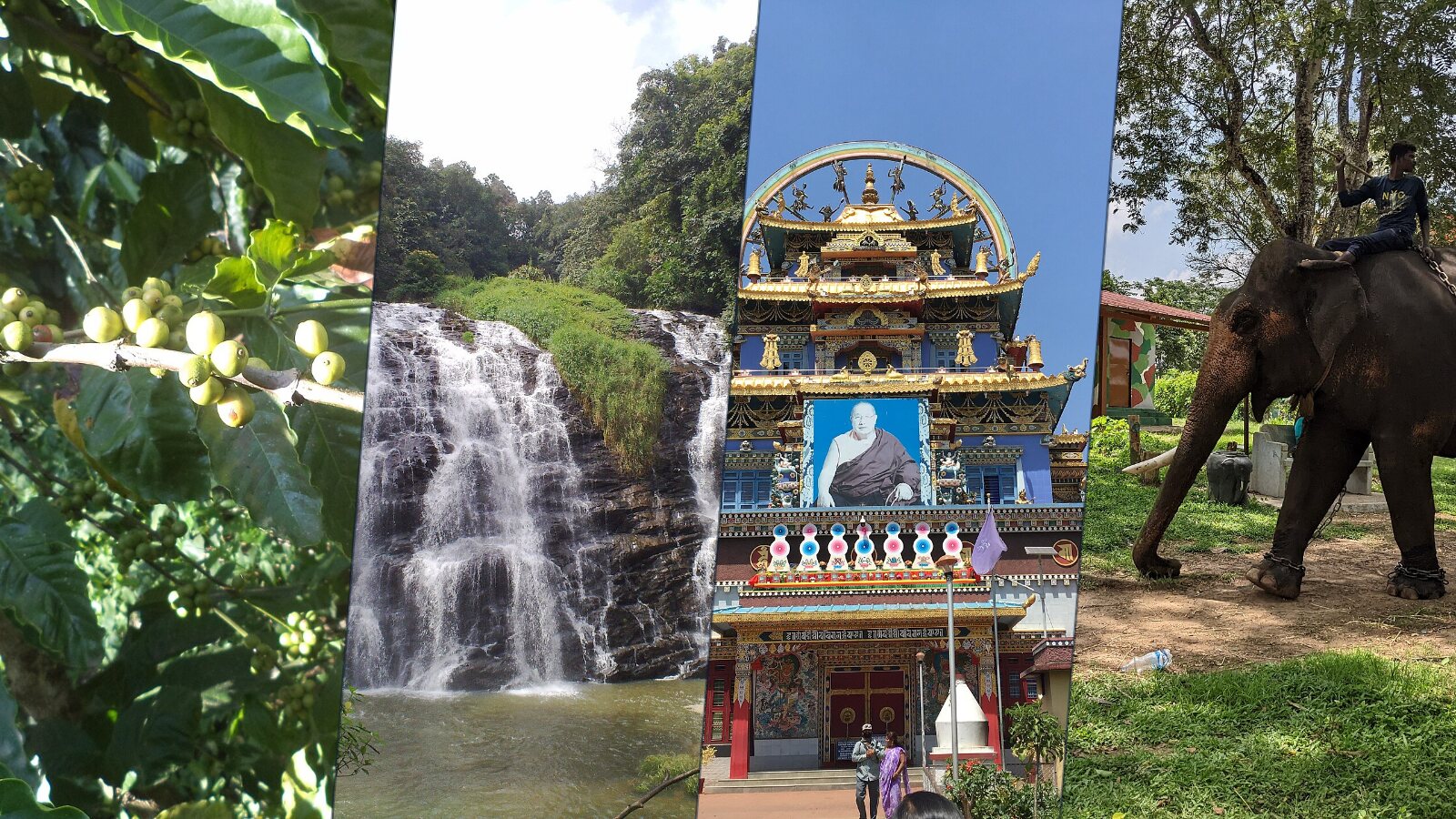
Drive in through Kushalnagar, the gateway to Coorg, and stop at Bylakuppe, one of the largest Tibetan settlements in India. The Namdroling Monastery, known as the Golden Temple, has three huge gilded statues of the Buddha and is full of young monks. Have a plate of momos or thukpa in the settlement.
Continue to Madikeri and check in. In the evening, watch the sunset from Raja's Seat, a garden on the edge of a ridge where the kings of Coorg once sat to watch the valley.
Day 2: Waterfalls, coffee and a high viewpoint
Start early with a jeep ride up to Mandalpatti (a few hundred rupees for the jeep), grassy hilltops at the edge of the Pushpagiri forest, where the clouds often sit below you at sunrise. On the way back, visit Abbey Falls, a waterfall in the middle of a coffee estate, best after the monsoon.
In the afternoon, take a coffee plantation walk: see how coffee and pepper are grown under the forest canopy, how beans are picked, dried and roasted, and taste the result. Most homestays offer this to their guests. Visit Madikeri Fort in town if you have time.
Day 3: Dubare and Talakaveri
Choose one of two mornings:
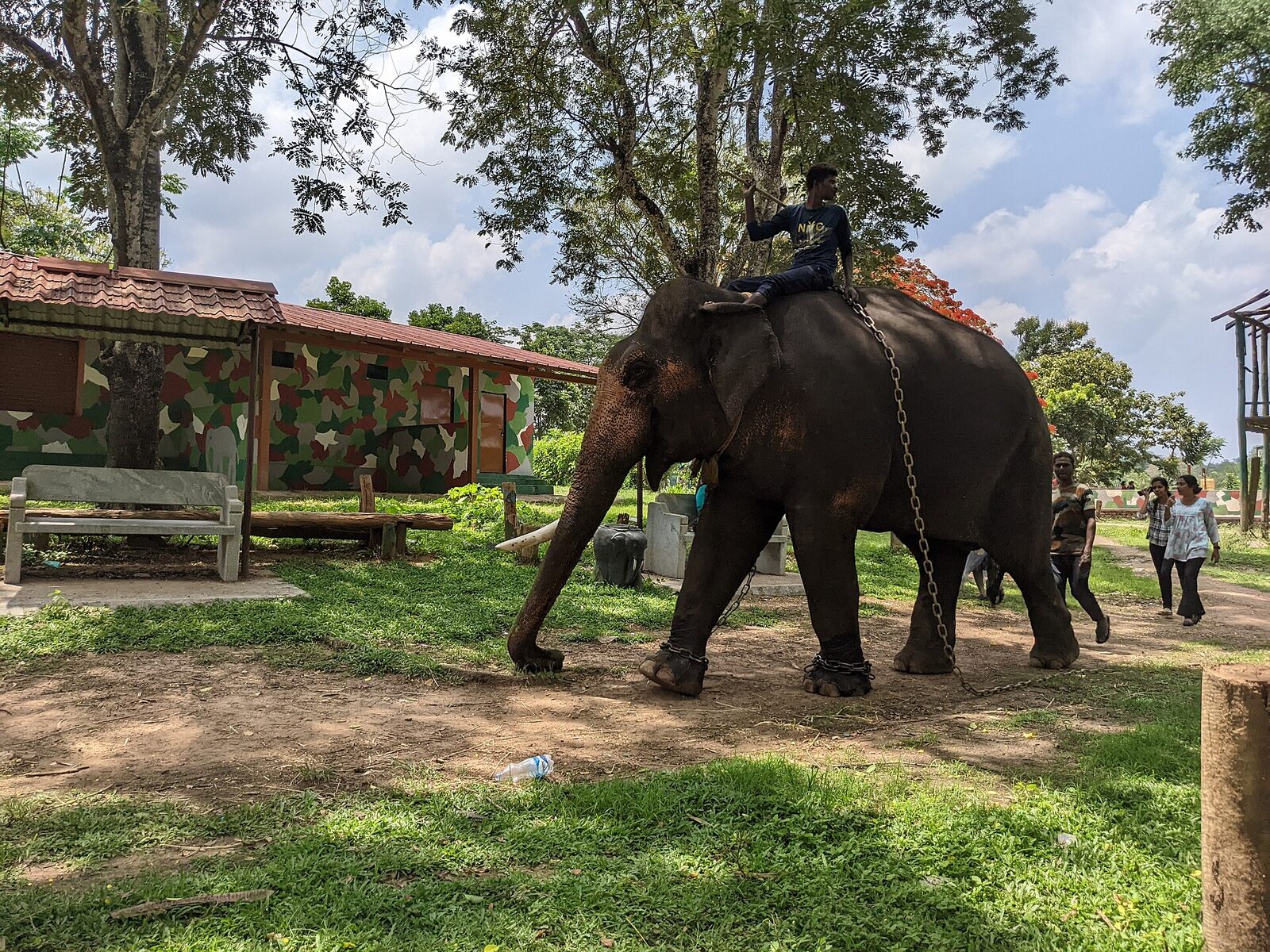
- Dubare Elephant Camp: on the Kaveri river near Kushalnagar, a forest department camp where you can watch the elephants being bathed and fed in the morning. Cross the river by boat to reach it. Be there early, as it's busiest after 9 am.
- Talakaveri and Bhagamandala: drive to Bhagamandala, where three rivers meet, then up to Talakaveri on Brahmagiri hill, the source of the Kaveri, with views across the Western Ghats.
Then head home after lunch.
Coorg looks small on the map, but the roads are narrow and winding. Don't try to see everything. Pick two or three things a day, and leave time to sit on your homestay's veranda with a coffee.
Where to stay: choose a plantation homestay
The best way to experience Coorg is to stay on a working coffee estate. Plantation homestays are run by Kodava families, and you wake up among the coffee bushes, walk the estate with the owner, and eat home-cooked Kodava food at the family table.
| Stay | Price a night | Why |
|---|---|---|
| Plantation homestays | about ₹2,500 to ₹6,000 | The real Coorg: estate walks, home food, quiet |
| Madikeri town | about ₹1,000 to ₹2,500 | Cheapest, central for sightseeing |
| Luxury estate resorts | ₹12,000 and up | Private pool villas in the coffee |
Choose a homestay with good recent reviews, and check whether meals are included and how far it is from the main road. Some of the most beautiful are down rough estate tracks.
Coorg is also one of the most popular honeymoon destinations in India for couples who want privacy.
What to eat in Coorg
Kodava food is the reason many people come back. Try:
- Pandi curry: pork cooked with kachampuli, a dark, sour vinegar from the kodampuli fruit. Coorg's signature dish.
- Kadambuttu: steamed rice balls, eaten with the curry
- Noolputtu and paputtu: rice noodles and steamed rice cake
- Bamboo shoot curry in the monsoon
- Coorg coffee and honey, sold at estates and in Madikeri
Vegetarians do well too, with mushroom, jackfruit and bamboo dishes, and South Indian food is everywhere.
What a 3-day Coorg trip costs
A rough budget per person for two people sharing, not counting travel to Coorg:
| Budget | Mid-range | |
|---|---|---|
| Stay (2 nights, per person) | ₹1,200 to ₹3,000 | ₹3,000 to ₹6,000 |
| Food (per day) | ₹400 to ₹800 | ₹800 to ₹1,800 |
| Local transport, jeep and boats | ₹800 to ₹1,500 | ₹1,500 to ₹2,500 |
| Entry fees and activities | ₹300 to ₹800 | ₹800 to ₹1,500 |
| Total for 3 days | ₹3,500 to ₹8,000 | ₹8,000 to ₹15,000 |
If you're driving from Bengaluru, add fuel for about 500 km, roughly ₹3,700 for the car on JrnyLoop's planner estimate, plus tolls. For more ways to keep costs down, see how to plan a budget trip in India.
Adventure in Coorg
- Tadiandamol: the highest peak in Coorg, at about 1,748 m, a full-day trek through shola forest and grassland from near Kakkabe
- Iruppu Falls: a waterfall near Nagarhole, in the south of Coorg, reached by a short forest walk
- Mallalli Falls: a dramatic waterfall on the edge of the Pushpagiri range, best just after the monsoon
- River rafting: on the Barapole river in the monsoon, and gentler stretches on the Kaveri at Dubare
Check whether trails are open before you go, as some close during the monsoon or need forest department permission.
Kodava culture and festivals
The Kodavas have their own language, dress and traditions, and many homestay hosts are happy to talk about them. Kailpodh, in September, is a harvest-related festival when weapons are worshipped. Kaveri Sankramana, in October, draws pilgrims to Talakaveri when the spring at the river's source is said to rise. Puttari, the rice harvest festival, falls in November or December, with music and feasts.
Coorg in the monsoon
From June to September, Coorg gets some of the heaviest rain in Karnataka. The estates are at their greenest and the waterfalls are spectacular, but leeches are everywhere on forest walks, mist can hide the views and roads occasionally close after landslides. Stay at one homestay, plan short outings, and enjoy the rain from the veranda.
Coorg travel tips
Carry salt and long socks in the monsoon. Leeches are common on estate walks and forest trails from June to September.
Drive in daylight. The roads are narrow, winding and often foggy. Read our guide to ghat road driving before you go.
Book weekends early. Coorg is a favourite with Bengaluru, and good homestays fill up weeks ahead for long weekends.
Buy coffee from the estates. It's fresher and cheaper than in the shops on the main road.
Respect private estates. Plantations are private land. Don't wander in without permission.
Combine Coorg with other places
- Mysuru: the palace city, about 2½ hours away
- Kabini: for wildlife safaris on the edge of Nagarhole, about 3 hours away
- Chikmagalur and Sakleshpur: more coffee country to the north
- Wayanad: across the border in Kerala
Our guide to weekend getaways from Bangalore covers all of these, with drive times.
Coorg's coffee story
Coffee came to India, legend says, with the Sufi saint Baba Budan, who smuggled seven beans from Yemen in the 17th century and planted them in the hills of Chikmagalur, north of Coorg. Coffee spread across the Western Ghats under the British, and today Karnataka grows most of India's coffee, with Coorg one of the largest growing districts.
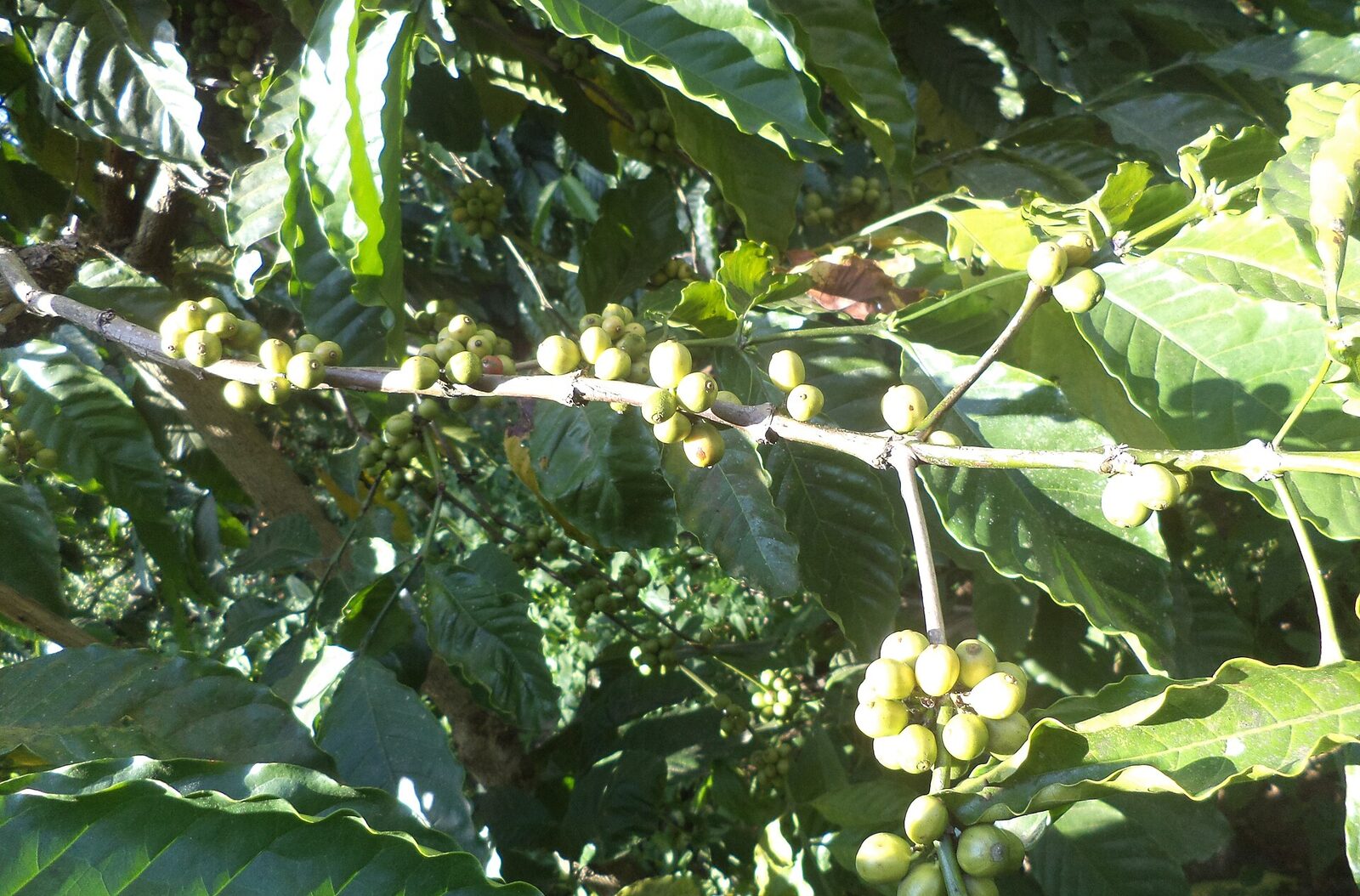
Coorg's estates grow both arabica and robusta coffee, usually under a canopy of tall shade trees that also support pepper vines, so the plantations look like forests. Harvest runs from about December to February, when the ripe red cherries are picked by hand and dried in the sun. The coffee blossom, usually in March and April after the first showers, fills the estates with white flowers and a jasmine-like scent for a few days.
A day on a coffee estate
Most plantation homestays offer a walk through the estate with the owner. You'll see how coffee and pepper grow together, how the beans are picked, pulped, dried and sorted, and you'll often end with a tasting of the estate's own coffee. Some estates run more detailed tours with roasting demonstrations. It's the best way to understand why Coorg looks the way it does.
Coorg for families
Coorg works well for family trips: short drives, homestays with home-cooked food, and gentle outings. Children enjoy the elephants at Dubare, the Golden Temple at Bylakuppe, the boat ride across the Kaveri, Abbey Falls and the gardens at Raja's Seat. Keep the jeep ride to Mandalpatti for older children, as it's bumpy.
Wildlife near Coorg
Coorg borders Nagarhole National Park, one of the best places in South India for elephants, gaur, leopards and tigers. Safaris start from the Nagarhole gate on the Coorg side or from Kabini. Book jeep safaris through the Karnataka forest department or Jungle Lodges. Coorg's forests and estates are also home to Malabar giant squirrels, hornbills and many other birds, so carry binoculars on estate walks.
Coorg to Kerala, or Coorg to Chikmagalur
Coorg pairs naturally with other Western Ghats destinations. Wayanad in Kerala is about three hours south, with forests, waterfalls and caves. Chikmagalur, Karnataka's other coffee country, is about four hours north, with Mullayanagiri, Karnataka's highest peak. Our weekend getaways from Bangalore cover both.
Common mistakes in Coorg
- Booking a hotel on the main road instead of a plantation homestay.
- Driving the ghat roads after dark in fog or rain.
- Trying to see everything in a day. Coorg is spread out.
- Forgetting leech protection in the monsoon.
- Buying coffee from roadside shops instead of estates.
Coorg's waterfalls
Coorg's waterfalls are at their best in and just after the monsoon, from July to October:
- Abbey Falls: near Madikeri, surrounded by coffee estates, and the easiest to reach.
- Iruppu Falls: in the south of Coorg, near Nagarhole, with a short forest walk and a temple at the start.
- Mallalli Falls: in the north, near Somwarpet, with steep steps down to a viewpoint, and one of the most powerful falls in the region in the rains.
- Chelavara Falls: near Virajpet, a quieter fall in the forest.
In the heaviest monsoon, the paths can be slippery and some viewpoints close, so check before you go, and don't swim in the pools below the falls.
What to buy in Coorg
- Coffee: fresh Arabica and Robusta from the estates, ground or as beans
- Spices: black pepper, cardamom and cinnamon from the plantations
- Honey: Coorg's forest and estate honey
- Homemade chocolates from Madikeri's small shops
- Kodava pickles, including the famous pork pickle
Buy coffee from the estates or the Coffee Board and cooperatives for the best quality and price.
Coorg on a budget
Coorg can be expensive in plantation homestays, but it's easy to keep costs down. Stay in a simple homestay near Madikeri or Kushalnagar, take KSRTC buses from Bengaluru or Mysuru, eat at local restaurants, and use shared jeeps or a scooter to get around. Many of the best things to do, like the viewpoints, waterfalls and the Namdroling monastery, are free or very cheap.
Getting around Coorg
Coorg has no railway station or airport, so most travellers come by road. KSRTC buses run from Bengaluru and Mysuru to Madikeri, Kushalnagar and Virajpet, and local buses link the main towns. To reach the waterfalls, estates and viewpoints, you'll need a car: hire a taxi for the day, or drive yourself. Roads are narrow and winding, with sharp bends through the estates, and they're slippery in the monsoon, so drive slowly and avoid driving after dark. Many homestays are down rough estate tracks, so ask about the road before you arrive, especially in a low car.
Plan your Coorg trip with JrnyLoop
Tell JrnyLoop where you're starting and that you're going to Coorg, and it plans the route with realistic drive times for the ghat roads, lays out each day with Mandalpatti at sunrise, Dubare in the morning and Raja's Seat at sunset, adds entry fees and picks meals Coorg is known for. It budgets the trip for your group and packs for the season, including rain gear in the monsoon.
The short version
Go between October and May, or in the monsoon if you love rain. Give Coorg three days, stay on a coffee estate, and see the Golden Temple at Bylakuppe, Raja's Seat at sunset, Mandalpatti at sunrise, Abbey Falls, and Dubare or Talakaveri. Eat pandi curry, buy coffee from the estate and leave time to do nothing at all.


Comments