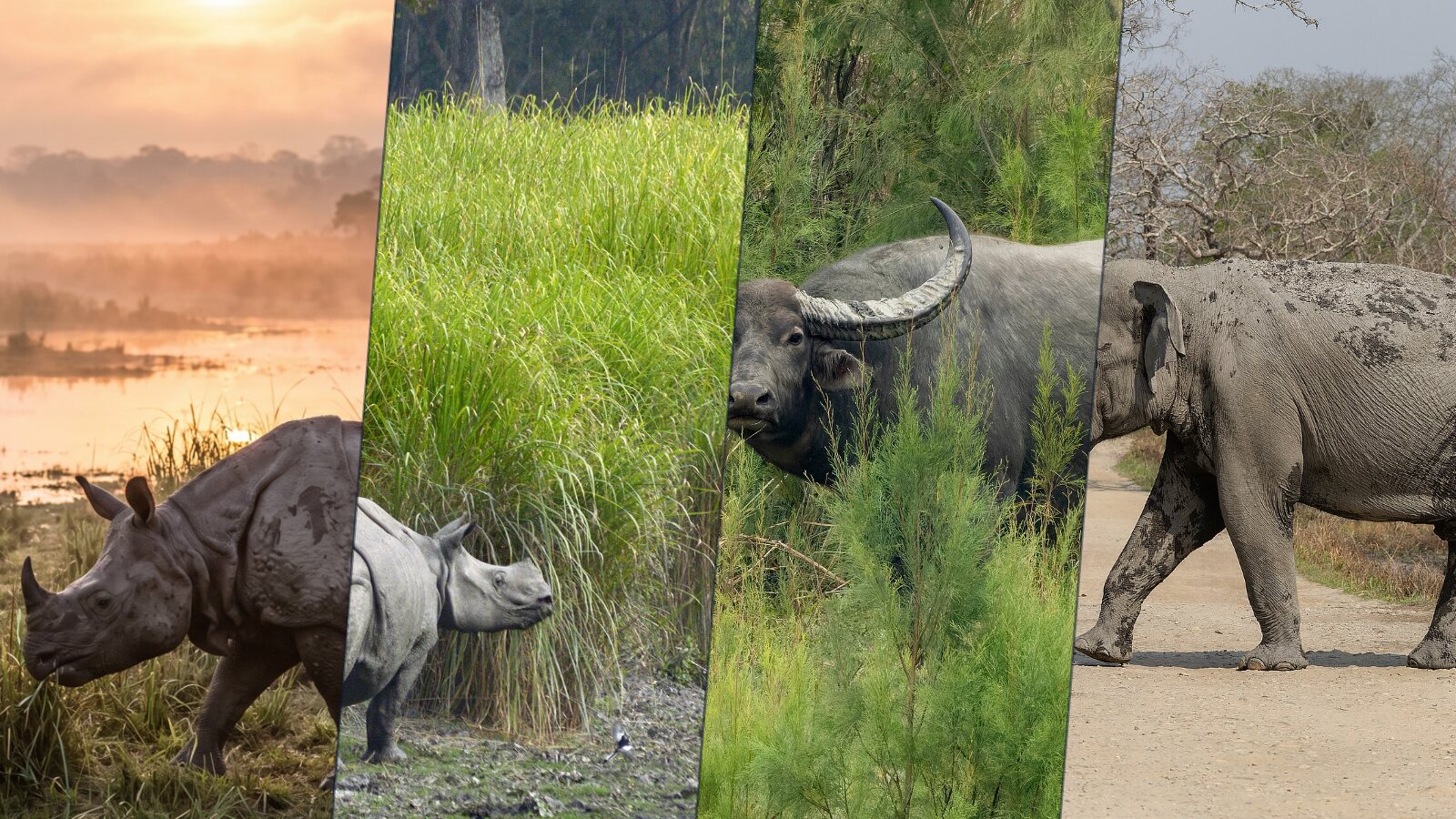
Kaziranga National Park in Assam is one of the great wildlife parks of Asia, and a Kaziranga safari is the best way to see it. Its tall elephant grass, marshes and forest on the floodplains of the Brahmaputra are home to about two-thirds of the world's greater one-horned rhinos, as well as wild water buffalo, elephants, swamp deer, one of the highest densities of tigers anywhere, and hundreds of species of birds. It has been a UNESCO World Heritage Site since 1985.
Unlike tiger reserves, where you might go home without a sighting, a Kaziranga safari almost always shows you rhinos, often several, grazing in the open grassland. This guide covers the four ranges, jeep and elephant safaris, the season, costs, where to stay and how to get there.
When is Kaziranga open?
Kaziranga closes every year for the monsoon, from about June to September, when the Brahmaputra floods large parts of the park and the animals move to higher ground. It usually reopens in October or November, range by range.
- November to February: cool, pleasant days and misty mornings. A great time for birds, including winter migrants.
- March and April: warmer, and the grass is burned and grazed short, so animals are easier to see. Many people think this is the best time for sightings.
- May: hot and humid, with the first rains, before the park closes.
Every year the park's opening dates, and which ranges are open, are announced by the forest department. Check before you book if you're travelling in October, November or May.
The four ranges of Kaziranga
| Range | Gate | Best for |
|---|---|---|
| Central (Kohora) | Kohora | The most rhinos, open grassland, the classic first safari |
| Western (Bagori) | Bagori | Rhinos, buffalo and elephants, often the highest rhino density |
| Eastern (Agaratoli) | Agaratoli | Birds, including pelicans and storks, and fewer vehicles |
| Burapahar (Ghorakati) | Ghorakati | Hilly forest, quieter, for repeat visitors |
For a first visit, book one safari in the Central range and one in the Western range. If you love birds, add the Eastern range.
Jeep safaris
Jeep safaris are the main way to see Kaziranga. Each jeep takes about six people and drives along set routes through the grassland, stopping at watchtowers. There are usually two shifts, morning and afternoon, each lasting about two to three hours.
You can book a jeep through your lodge, which is the easiest way, or through the forest department's booking system. Shared jeeps are often arranged by lodges for solo travellers and couples.
Elephant safaris
Early-morning elephant safaris are offered in the Central and Western ranges at certain times of the season. They take you deep into the tall grass, sometimes very close to rhinos. Places are limited and book out quickly. Elephant rides raise animal welfare concerns for many travellers, so decide for yourself whether you want to take one. A jeep safari shows you just as many rhinos.
What you'll see on a Kaziranga safari
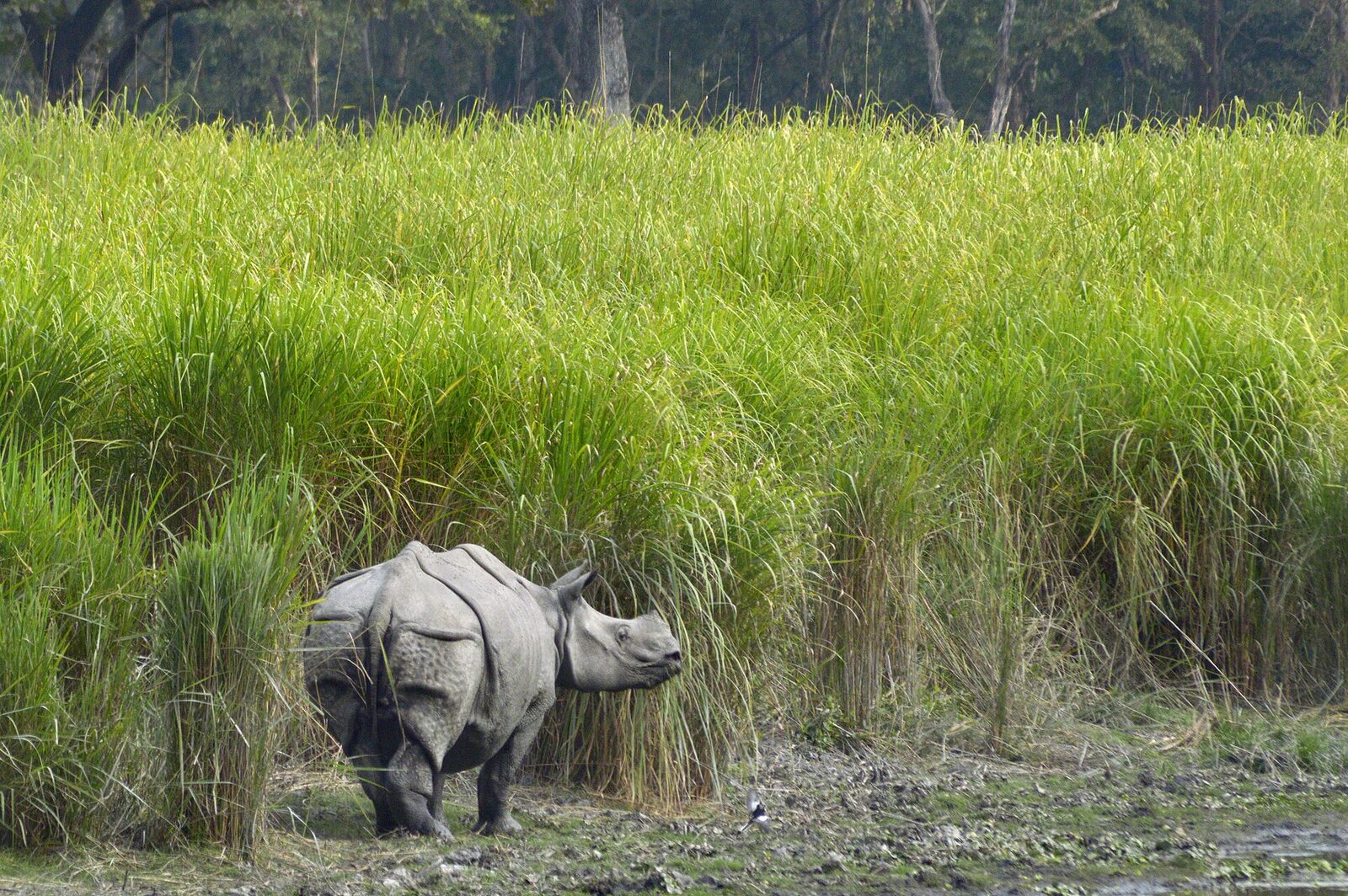
- Greater one-horned rhinoceros: almost guaranteed, often in large numbers
- Wild water buffalo: huge, with swept-back horns
- Asian elephants: herds, often with calves
- Eastern swamp deer, hog deer and wild boar
- Tigers: present in high numbers, but hard to see in tall grass
- Birds: pelicans, storks, eagles, the Bengal florican and many more
- Gangetic river dolphins in the Brahmaputra, sometimes seen near the park
What a Kaziranga safari costs
A jeep safari usually costs a few thousand rupees per jeep, including the entry fees for Indian visitors, shared by up to six people. Foreign visitors pay higher entry fees. Elephant safaris cost more per person. Lodges often add a small booking charge.
A two-night trip with three jeep safaris usually costs about ₹8,000 to ₹15,000 per person on a budget, sharing a room, including the stay and food but not travel to Kaziranga.
Where to stay
| Area | Price a night | Why |
|---|---|---|
| Kohora | about ₹2,500 to ₹6,000 | Near the Central range gate, the most choice |
| Bagori and Burapahar | about ₹1,500 to ₹3,000 | Budget lodges near the Western range |
| Tea estate bungalows | about ₹8,000 to ₹20,000 | Colonial planters' homes in the tea gardens around the park |
Many lodges include safari bookings and transfers to the gates. Book ahead for December, the New Year and March.
How to get to Kaziranga
- From Guwahati: about 217 km, around 4½ hours by road on JrnyLoop's estimate, along the highway that runs beside the park. Guwahati has the main airport and railway station for the region.
- From Jorhat: about 100 km, with a smaller airport.
- By train: the nearest stations are Jakhalabandha and Furkating, from where you'll need a taxi.
The highway along Kaziranga's southern edge crosses animal corridors. Speed limits are strictly enforced, and animals, especially in the flood season, cross the road. Drive slowly and never stop to feed or approach animals.
Other things to do around Kaziranga
- Tea estate walks: see how Assam tea is grown and processed, and taste it fresh
- Kaziranga Orchid Park: hundreds of orchid species, with an evening cultural show
- The Brahmaputra: river trips and sunsets on the mighty river
- Hoollongapar Gibbon Sanctuary: near Jorhat, the only place in India to see the hoolock gibbon, India's only ape
- Majuli: the world's largest river island, with its satras (Vaishnavite monasteries), mask-making and Mising villages. Reach it by ferry from Jorhat.
A 3-day Kaziranga plan
Day 1: drive from Guwahati, stopping for an Assamese thali on the way, and reach Kohora by afternoon. Evening at the Orchid Park.
Day 2: early-morning jeep safari in the Central range, a tea estate walk in the middle of the day, and an afternoon jeep safari in the Western range.
Day 3: a morning safari in the Eastern range for birds, then continue to Jorhat and Majuli, or drive back to Guwahati.
Kaziranga safari tips
- Book safaris a day or two ahead through your lodge, earlier in peak season.
- Take the first safari of the day. The light is soft, the grass is misty and animals are active.
- Carry binoculars and a zoom lens. Rhinos come close, but birds and tigers don't.
- Wear muted colours and layers. Winter mornings in an open jeep are cold.
- Stay in the vehicle and keep your voice down. Rhinos and buffalo can charge.
Why Kaziranga is so special
Kaziranga is a UNESCO World Heritage Site (since 1985) and a tiger reserve, and it's one of the great conservation success stories of India. In the early 20th century, the one-horned rhino had been hunted almost to extinction in Assam, with only a few dozen left at Kaziranga. Protection began in 1905, and today the park holds the largest population of greater one-horned rhinos in the world, numbering in the thousands. It also has one of the highest densities of tigers among protected areas anywhere, along with large populations of wild water buffalo, eastern swamp deer and Asian elephants.
The park's landscape is shaped by the Brahmaputra: every monsoon, the river floods large parts of the park, refreshing the grasslands and wetlands. Animals move to higher ground, including man-made highlands built for them inside the park, and some cross the highway to the Karbi Anglong hills to the south.
Birds of Kaziranga
Kaziranga is an Important Bird Area, with more than 450 species recorded. In winter, the wetlands fill with migratory ducks, geese and waders. Look for:
- Bengal florican, one of the world's rarest bustards
- Greater adjutant and lesser adjutant storks
- Spot-billed pelicans, which nest in the park
- Black-necked storks
- Pallas's fish eagle and grey-headed fish eagle
- Swamp francolin and great hornbill in the forested areas
The Eastern range around Agaratoli is the best for birds, especially from November to February.
Assam tea gardens around Kaziranga
Kaziranga is surrounded by tea estates, and a walk through a working garden is one of the nicest things to do between safaris. You'll see tea being plucked by hand, visit a factory to watch it being withered, rolled, dried and sorted, and taste the strong, malty Assam tea the region is famous for. Several old planters' bungalows have become heritage stays, a lovely way to experience the estates.
What to eat in Assam
Try an Assamese thali with rice, dal, masor tenga (a light, sour fish curry), khar (an alkaline dish made with banana peel ash), aloo pitika (mashed potato with mustard oil), pork with bamboo shoot, and duck curry. Finish with pitha, rice cakes made especially during Bihu, and a cup of fresh Assam tea.
Kaziranga with children
Children love the rhinos, elephants and buffalo seen from the jeep, the Orchid Park and its cultural show, and walks through the tea gardens. Choose a lodge near Kohora with a garden, take the early-morning safari when it's cool, and carry warm clothes for winter mornings, which are chilly in an open jeep.
Responsible wildlife watching
- Stay in your vehicle and keep your voice down.
- Don't ask drivers to get closer than the rules allow.
- Never feed animals, inside or outside the park.
- Drive slowly on the highway, which crosses animal corridors, especially during the monsoon floods.
- Choose lodges that employ local people and support conservation.
A sample Kaziranga budget
For two people for two nights, not counting travel to Guwahati: a mid-range lodge near Kohora ₹5,000 to ₹12,000 for two nights, three jeep safaris shared between two (with entry fees) roughly ₹9,000 to ₹15,000, food ₹2,000 to ₹4,000, and the car from Guwahati and back ₹7,000 to ₹10,000. A budget trip with a shared jeep and a simpler lodge costs much less.
Common mistakes in Kaziranga
- Visiting in the monsoon, when the park is closed.
- Booking only one safari and missing the other ranges.
- Speeding on the highway through the park's animal corridors.
- Skipping the Eastern range if you love birds.
- Not carrying warm clothes for winter morning safaris.
Kaziranga and the Brahmaputra floods
Every monsoon, the Brahmaputra floods large parts of Kaziranga. The floods are part of what makes the park so rich, as they renew the grasslands and fill the wetlands that support rhinos, buffalo, deer and birds. But they also force animals to move to higher ground, including man-made highlands inside the park and the Karbi Anglong hills to the south, which means crossing the highway. During the floods, speed limits are enforced on the highway along the park, and you may see animals near the road. Drive slowly, never stop to feed or disturb them, and follow the forest department's instructions. The park is closed to safaris during the monsoon.
The one-horned rhino's comeback
In the early 20th century, the greater one-horned rhino was close to disappearing from Kaziranga because of hunting, with only a small number left. Protection began in the early 1900s, when the area was set aside as a reserve forest, and over the following century, careful protection brought the rhinos back. Today, Kaziranga has the largest population of one-horned rhinos in the world, with the 2022 census counting more than 2,600. Poaching for rhino horn is still a threat, and the forest guards who protect the park work in tough conditions.
Photography in Kaziranga
- Bring a long lens, ideally 300 mm or more, as many animals are some distance from the track.
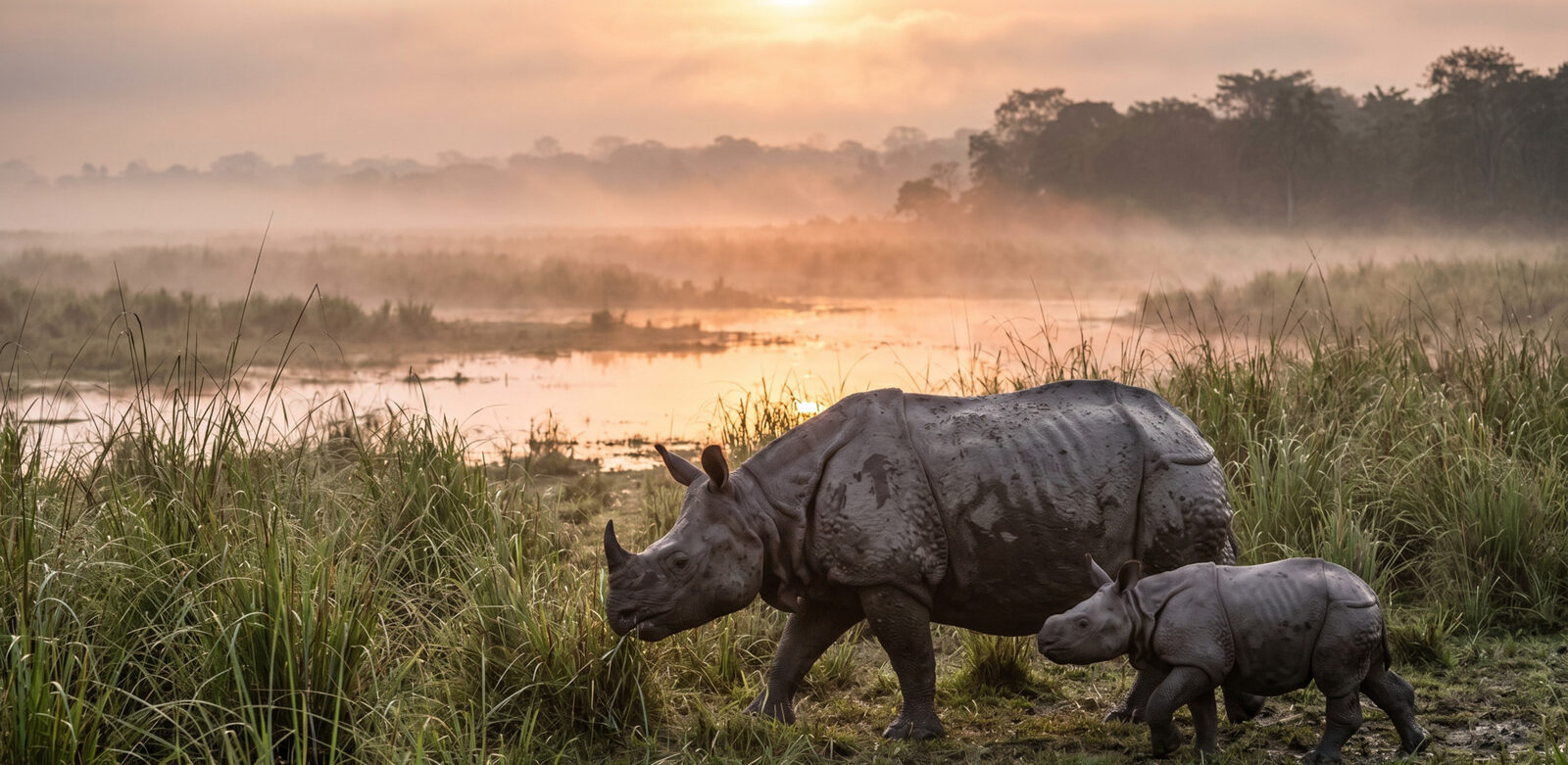
- Book early morning safaris, when the mist over the grasslands makes beautiful photos.
- The elephant safari gets you close to rhinos at eye level, which is great for photos.
- Keep your camera covered from the dust on jeep tracks.
- Look for birds, too, including pelicans, storks and eagles, which make great subjects.
Kaziranga with older parents
- Choose the Central Range for its shorter drives and good sightings.
- Book a resort close to Kohora, to avoid long rides before dawn.
- Skip the elephant safari if climbing onto the elephant's back is difficult.
- Carry warm layers for winter mornings, and a cushion for the bumpy jeep.
Other parks near Kaziranga
- Pobitora Wildlife Sanctuary: about an hour from Guwahati, with one of the highest densities of one-horned rhinos in the world. A good half-day if you're short of time.
- Orang National Park: on the north bank of the Brahmaputra, sometimes called a mini Kaziranga, with rhinos, tigers and fewer visitors.
- Nameri National Park: a tiger reserve in the foothills, known for birds and rafting on the Jia Bhoroli river.
- Manas National Park: a UNESCO World Heritage Site on the Bhutan border, with tigers, elephants and the rare golden langur.
Each has its own opening season, usually from about November to April.
Kaziranga in the shoulder months
When the park reopens around October and November, some ranges and tracks may still be closed while the roads dry out, and the grass is tall. By April and May, the grass has been burnt or cut back, which makes animals easier to see, but the days are hot and humid. For a balance of weather and sightings, aim for December to March.
Plan your Northeast trip with JrnyLoop
Tell JrnyLoop where you're starting and that you're going to Kaziranga, and it plans the drive from Guwahati with realistic road times, schedules your safaris for the morning and afternoon, adds a tea estate walk between them and budgets the trip for your group. Add Shillong, Majuli or Tawang as stops and it plans the whole route.
Kaziranga combines beautifully with Meghalaya and Arunachal. See our North East India trip guide, our Meghalaya trip plan, and our guide to a tiger safari in India for the big cat reserves.
The short version
Go between November and April, when the park is open, with March and April best for sightings. Stay near Kohora, book jeep safaris through your lodge, and take at least two, one in the Central range and one in the Western, with an Eastern range safari if you love birds. You'll almost certainly see rhinos, probably dozens. Add tea estates, the gibbons near Jorhat and Majuli to make a week of it.


Comments