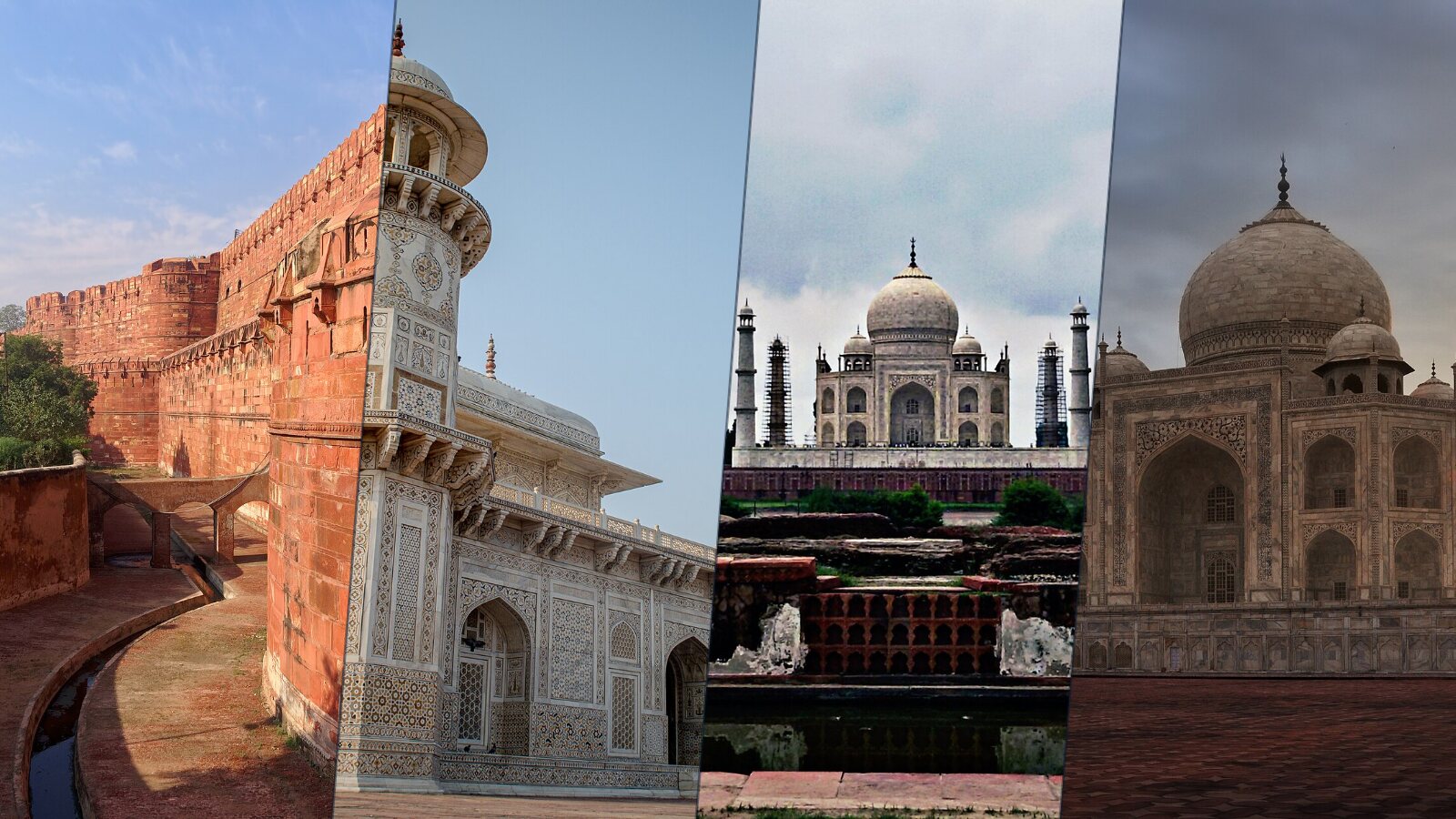
The Taj Mahal is one of the few places on earth that looks even better in person than in photographs. But a visit goes much more smoothly when you know the rules: which Taj Mahal tickets to buy, why you shouldn't plan your trip for a Friday, which gate has the shortest queue, what you can't carry inside, and why sunrise is worth the early alarm.
This guide covers all of it, plus the night viewing on full moon nights, the best way to get to Agra, and what else to see in the city in a day or two.
Taj Mahal tickets at a glance
| Visitor | Entry ticket | Main mausoleum (extra) |
|---|---|---|
| Indian citizens | about ₹50 | about ₹200 |
| SAARC and BIMSTEC citizens | about ₹540 | about ₹200 |
| Foreign tourists | about ₹1,100 | about ₹200 |
| Children under 15 | Free | Free |
Prices come from the Archaeological Survey of India (ASI) and change from time to time, so check the official ASI booking site before you go.
The most important thing to understand is that the basic ticket doesn't include the inside of the main tomb. It lets you into the gardens, the gateway, the mosque and the platform around the mausoleum. To go inside the tomb itself, where the cenotaphs of Shah Jahan and Mumtaz Mahal lie, you need the extra mausoleum ticket. Buy both together.
Book your Taj Mahal tickets online on the official ASI portal. You'll skip the ticket counter queue, and online tickets are usually slightly cheaper. Show the QR code on your phone at the gate.
Taj Mahal timings
- Open: from about 30 minutes before sunrise to about 30 minutes before sunset
- Closed: every Friday, when the mosque inside the complex is used for prayers
- Night viewing: on five nights around each full moon (see below)
The Friday closure catches out thousands of visitors every year. If you're planning a weekend trip from Delhi, go on a Saturday or Sunday, or a weekday.
The best time to visit the Taj Mahal
Time of day: sunrise. Be at the gate when it opens. The marble glows soft pink and gold in the early light, the crowds are at their thinnest, and it's cool even in summer. Late afternoon is the second-best time.
Season: October to March. The weather is pleasant, though December and January mornings can be very foggy, sometimes so foggy you can barely see the dome until 10 am. February, March, October and November are ideal. April to June is very hot, and the monsoon months are humid but quieter.
Day of the week: avoid Fridays (closed), weekends and public holidays if you can. Tuesday to Thursday mornings are the calmest.
Which gate to use
The Taj Mahal has three gates:
| Gate | Good to know |
|---|---|
| East Gate | Usually the shortest queues. Near the Shilpgram parking, with electric buses to the gate. The best choice at sunrise |
| West Gate | The main gate and the busiest, especially for tour groups and from mid-morning |
| South Gate | Opens later than the others, and is closest to the budget hotels of Taj Ganj |
Petrol and diesel vehicles aren't allowed near the Taj Mahal to protect the marble from pollution. You'll park a short distance away and walk, or take an electric bus or golf cart to the gate.
What you can and can't carry
Allowed: phones, cameras (no tripods), a small bottle of water, a small bag or purse.
Not allowed: food, tobacco and lighters, large bags, tripods, drones, knives, chargers and most electronics apart from your phone and camera. Lockers are available at the gates, but queues for them can be long, so travel light.
Inside the main tomb, photography isn't allowed, and you'll need to cover your shoes with the shoe covers given with the mausoleum ticket.
Taj Mahal night viewing
On five nights around each full moon, the full moon night and two nights either side, the ASI opens the Taj Mahal for night viewing. It's not open on Fridays or during Ramzan.
- Slots: eight half-hour slots from about 8:30 pm to 12:30 am, with up to 50 people in each
- Tickets: booked a day in advance at the ASI office in Agra, with an ID. They cost much more than day tickets
- What you see: the Taj from the red sandstone platform near the main gate, not up close, and only in moonlight
It's a quiet, magical experience, but the view is from a distance, so don't plan a whole trip around it.
How long do you need at the Taj Mahal?
Allow 2½ to 3 hours for the Taj Mahal itself, including the gateway, gardens, the main tomb and the mosque and guesthouse on either side. Add security queues at busy times. A licensed ASI guide for the Taj costs a few hundred rupees and is worth it for the history and the hidden details: the calligraphy that gets bigger as it rises so it looks the same size from below, the four minarets that lean slightly outward, and the perfect symmetry broken only by Shah Jahan's tomb.
A short history of the Taj Mahal
The Mughal emperor Shah Jahan began building the Taj Mahal in 1632 as a tomb for his wife, Mumtaz Mahal, who died in childbirth the year before. Thousands of craftsmen worked on it for more than twenty years. The white marble came from Makrana in Rajasthan, and the inlaid flowers, made of semi-precious stones set into the marble, were cut by hand.
Shah Jahan was later deposed by his son Aurangzeb and spent his last years imprisoned in Agra Fort, where, according to tradition, he could see the Taj across the river. When he died, he was buried beside Mumtaz Mahal, the only part of the Taj that breaks its perfect symmetry. The Taj Mahal became a UNESCO World Heritage Site in 1983.
Photography tips at the Taj Mahal
- The classic shot is from the central platform at the end of the long water channel, with the tomb reflected in the water. Get there first, before the crowds.
- The side views from the mosque and the guesthouse, framed by their red sandstone arches, are quieter and often more beautiful.
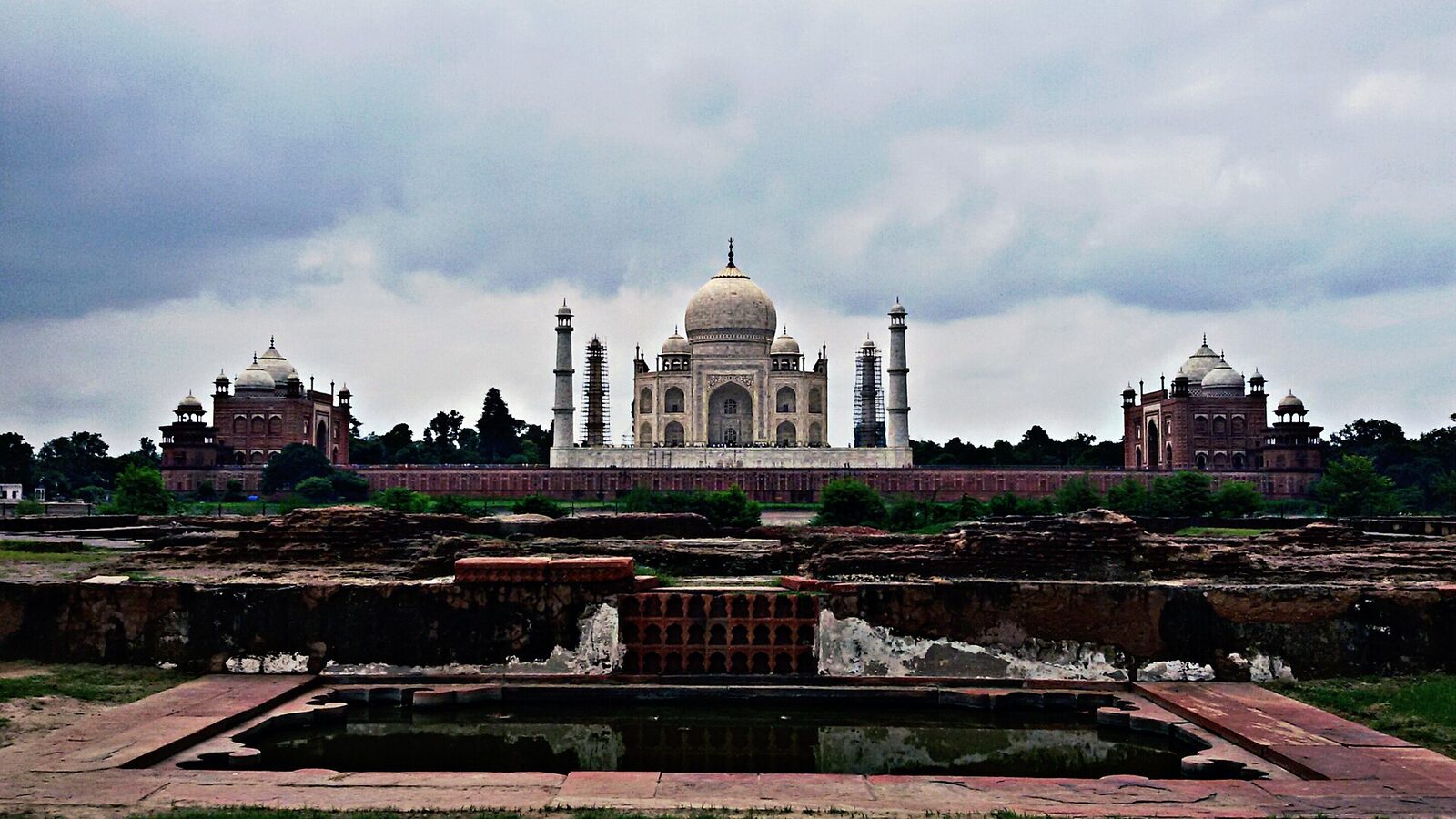
- From across the river, Mehtab Bagh gives you the Taj without any crowds at all, best at sunset.
- Tripods aren't allowed, and photography is banned inside the main tomb. Drones are prohibited.
- Foggy winter mornings can hide the dome. If the forecast is foggy, go in the late afternoon instead.
How to get to Agra
From Delhi by train: the quickest way. The Gatimaan Express and Vande Bharat trains reach Agra Cantt in under 2 hours, and the early Shatabdi is a classic. Take an early train to reach the Taj by mid-morning, or stay the night before for sunrise.
From Delhi by road: about 203 km on the Yamuna Expressway, around 3¾ hours on JrnyLoop's estimate, longer if Delhi traffic is bad. The expressway is fast and smooth, but tolls add up.
By air: Agra has a small airport with a few flights. Most people fly to Delhi and continue by train.
Agra is one of the most popular weekend getaways from Delhi, and it's the second stop on the classic Golden Triangle with Delhi and Jaipur.
What else to see in Agra
| Sight | Entry for Indians | Why go |
|---|---|---|
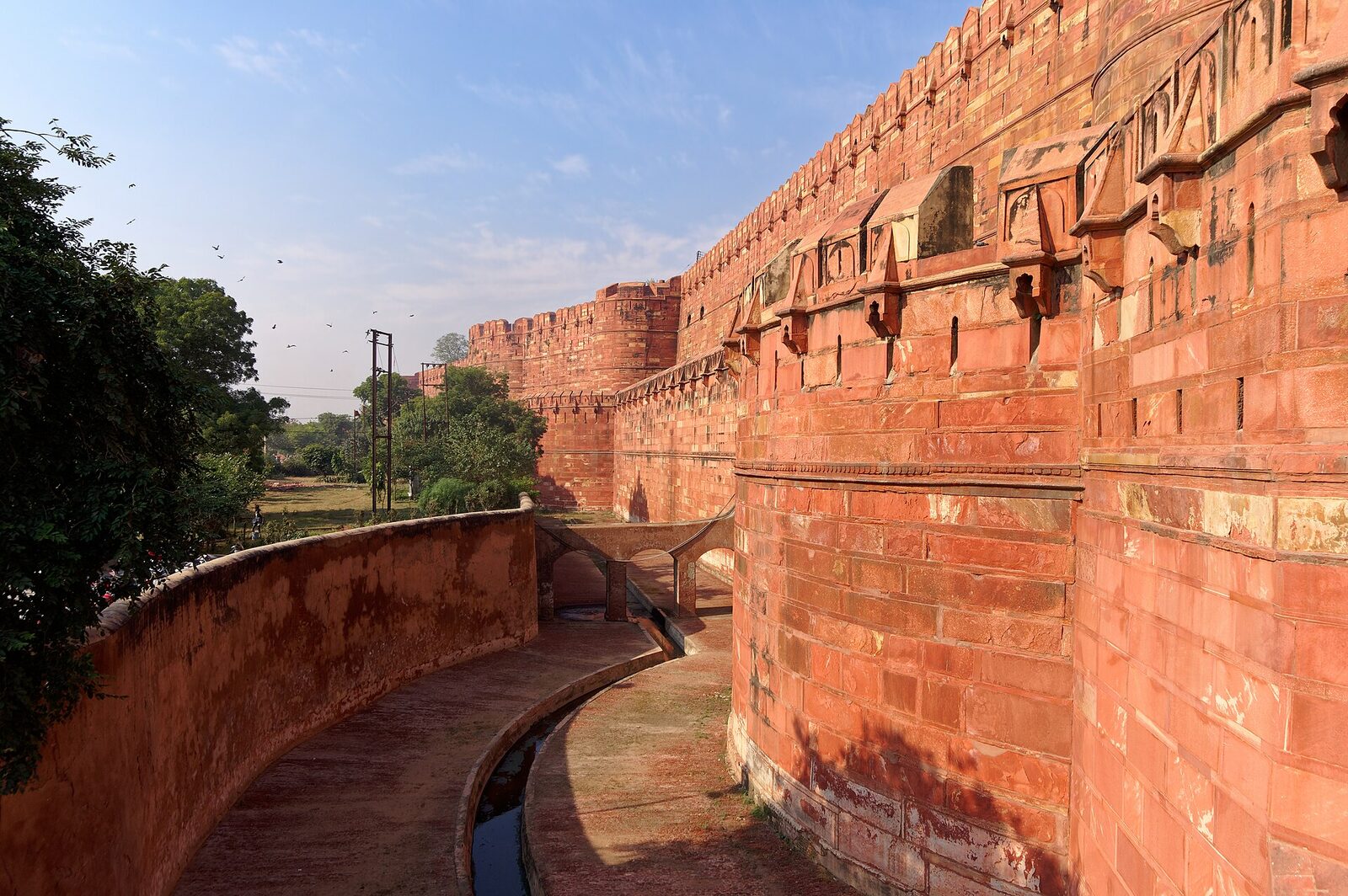
| Agra Fort | about ₹50 | The red sandstone Mughal fort where Shah Jahan was imprisoned, with views of the Taj |
| Itimad-ud-Daulah | about ₹30 | The "Baby Taj", a delicate marble tomb that inspired the Taj Mahal |
| Mehtab Bagh | about ₹30 | A garden across the Yamuna with the best sunset view of the Taj |
| Fatehpur Sikri | about ₹50 | Akbar's abandoned red sandstone capital, about 40 km away |
| Kinari Bazaar | Free | Agra's old market for street food, petha and textiles |
A 1-day and 2-day Agra plan
One day: Taj Mahal at sunrise, breakfast in Taj Ganj, Agra Fort late morning, lunch, Itimad-ud-Daulah in the afternoon, and Mehtab Bagh for sunset over the Taj.
Two days: add a half-day trip to Fatehpur Sikri and an evening in Kinari Bazaar, or the night viewing if your dates are close to the full moon.
Where to stay in Agra
- Taj Ganj (about ₹900 to ₹2,500 a night): budget hotels and guesthouses near the South and East Gates, many with rooftop views of the Taj
- Fatehabad Road (about ₹3,000 to ₹8,000): bigger hotels and restaurants, a short drive from the East Gate
- Taj East Gate Road (₹8,000 and up): luxury hotels, some with a view of the Taj from your room
Staying the night before is the easiest way to be at the gate for sunrise.
What to eat in Agra
Breakfast on bedai and jalebi, try Mughlai food at the old restaurants, and take home a box of petha, the translucent sweet made from ash gourd that Agra is famous for. Panchhi Petha is the best-known name, with many look-alike shops, so check the shop name.
Taj Mahal tips
Hire guides only at the official counters or through the ASI. Touts outside the gates often claim to be official.
Avoid "free" lifts and shopping tours. Drivers and rickshaw-wallahs often stop at marble and carpet shops for a commission.
Carry your ID. Indian visitors may be asked for ID at the gate, and you'll need it for the Indian ticket price.
Dress for walking and the heat. There's a lot of walking on marble and stone, which gets very hot by midday in summer.
A one-day Agra itinerary from Delhi
If you're coming from Delhi for the day, this plan fits in the essentials:
- 6:00: Gatimaan Express or an early Vande Bharat from Delhi
- 8:00: reach Agra Cantt, take a cab to the East Gate
- 8:30 to 11:00: the Taj Mahal, including the main mausoleum
- 11:30: brunch near Taj Ganj
- 12:30 to 14:30: Agra Fort
- 15:00: Itimad-ud-Daulah, the "Baby Taj"
- 16:30: Mehtab Bagh for the view of the Taj across the river
- Evening: dinner, buy petha, and the evening train back to Delhi
Check the train timings on the day you travel, and remember the Taj is closed on Fridays.
Fatehpur Sikri: worth the half day
About 40 km from Agra, Fatehpur Sikri was Emperor Akbar's capital in the late 16th century, built in red sandstone and abandoned within a few decades. See the Buland Darwaza, one of the tallest gateways in the world, the Jama Masjid, the white marble tomb of Salim Chishti, where visitors tie threads and make wishes, and the palaces of the royal enclosure, including the Panch Mahal and Diwan-i-Khas. Allow two to three hours. Guides at the gate are persistent; hire a licensed one if you want the stories.
The Taj Mahal with children and older parents
The Taj involves a lot of walking, often on hot stone. Use the electric buses from the parking areas, carry water (a small bottle is allowed), and plan the visit early in the morning. Wheelchairs are usually available at the gates for elderly or disabled visitors, so ask at the entry. Children under 15 enter free, which makes it an easy family trip.
Responsible visiting
The Taj Mahal's marble is protected by strict rules: no vehicles nearby, no touching the inlay work, and no climbing on the plinth edges. Keep your voice down inside the mausoleum, which is a tomb, and dispose of rubbish in the bins provided. Buy souvenirs from licensed shops, and politely decline the many "special view" offers outside.
Common mistakes at the Taj Mahal
- Planning a Friday visit, when it's closed.
- Buying only the basic ticket and then queuing again for the mausoleum ticket.
- Carrying a big bag, and losing time at the lockers.
- Arriving at midday, when it's hottest and busiest.
- Trusting touts who offer "fast entry" or claim the gates are closed.
What to wear to the Taj Mahal
There's no strict dress code, but modest, comfortable clothes are best, with shoulders and knees covered, as there's a working mosque in the complex. Wear shoes you can walk in for a few hours and slip off easily if needed. In summer, carry a cap and sunscreen: the marble platform and the gardens get extremely hot by late morning, and there's little shade on the walk from the gate.
Mughal Agra beyond the Taj: a quick history
Agra was the capital of the Mughal Empire for much of the 16th and 17th centuries. Akbar rebuilt Agra Fort in red sandstone and founded Fatehpur Sikri; his tomb stands at Sikandra, on the edge of the city, and is worth a visit for its gardens and gateway. Jahangir's queen Nur Jahan built the tomb of her father, Itimad-ud-Daulah, the first Mughal tomb faced in white marble with inlay work, which inspired the Taj. And Shah Jahan built the Taj Mahal before moving the capital to Delhi. Seeing the monuments in this order tells the story of Mughal architecture as it developed.
Plan your Agra trip with JrnyLoop
Tell JrnyLoop where you're starting and that you're going to Agra, and it plans the trip with realistic drive or train times, puts the Taj at sunrise and Mehtab Bagh at sunset, lists the entry fee for each sight, and warns you about the Friday closure. It also budgets the trip for your group.
If Agra is part of a longer journey, see our Rajasthan itinerary and our guide to places to visit in Jaipur for the rest of the Golden Triangle.
The short version
Don't go on a Friday. Book both Taj Mahal tickets online, the entry and the main mausoleum, and be at the East Gate when it opens. Travel light, hire a guide at the official counter, and finish the day at Mehtab Bagh for sunset over the river.


Comments