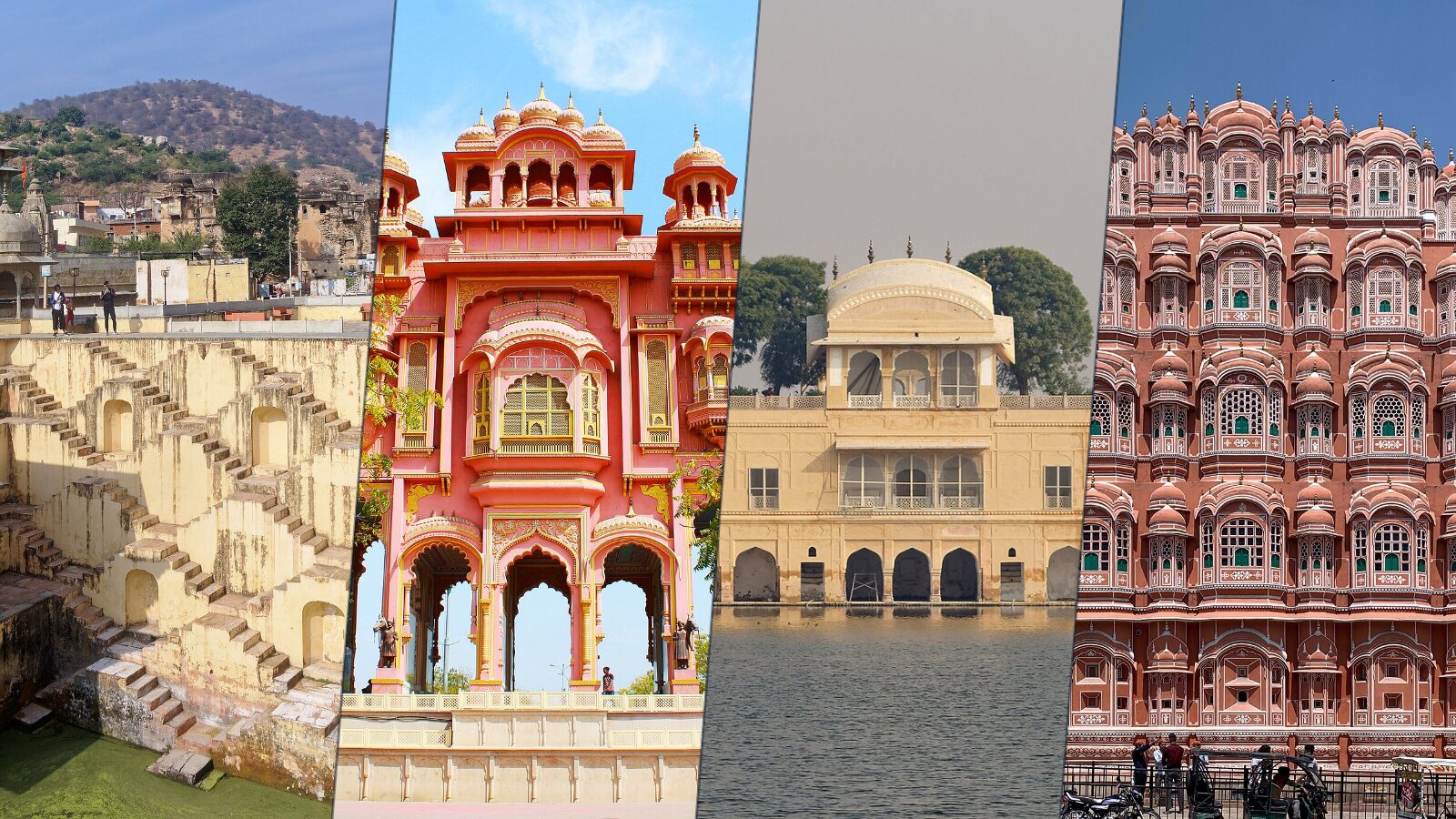
Jaipur is the easiest introduction to Rajasthan, and the places to visit in Jaipur are some of the most spectacular in India. In two days you can see a hilltop palace-fort, a façade of 953 windows, the largest stone sundial in the world, a palace floating in a lake and a city sunset from a fort wall, then shop for block prints and eat pyaaz kachori in the bazaars of the old Pink City.
They are spread between the walled old city and the hills to its north, and the order you see them in matters, because the forts are hot by noon and the best views are at sunset. Here are fifteen sights worth your time, with tickets and the best time of day for each, and a two-day plan that puts them in the right order.
The best time to visit Jaipur
October to March is the season, with sunny days and cool evenings. December and January mornings can be chilly. From April to June, afternoons go past 42°C, so plan forts for early morning and indoor sights for midday. The monsoon, from July to September, is humid but turns the Aravalli hills green.
Jaipur is at its busiest during the Jaipur Literature Festival in late January, Diwali, and the Christmas to New Year week.
The 15 best places to visit in Jaipur
| Place | Entry for Indians | Time needed | Best time |
|---|---|---|---|
| Amber Fort | about ₹200 | 2½ to 3 hours | Opening time |
| Panna Meena ka Kund | Free | 20 minutes | Morning |
| Jal Mahal | Free (viewed from the road) | 20 minutes | Morning |
| Hawa Mahal | about ₹50 | 45 minutes | Morning |
| City Palace | about ₹300 | 2 hours | Late morning |
| Jantar Mantar | about ₹50 | 1 hour | Midday |
| Nahargarh Fort | about ₹50 | 2 hours | Sunset |
| Jaigarh Fort | about ₹100 | 1½ hours | Afternoon |
| Albert Hall Museum | about ₹40 | 1 hour | Evening |
| Patrika Gate | Free | 30 minutes | Morning |
| Galtaji Temple | Free | 1½ hours | Late afternoon |
| Birla Mandir | Free | 45 minutes | Evening |
| Johari and Bapu Bazaar | Free | 2 hours | Evening |
| Chokhi Dhani | about ₹1,100 with dinner | 3 hours | Evening |
| Chand Baori, Abhaneri | about ₹25 | Half a day | Day trip |
Ticket prices change, so treat these as a guide. Foreign visitors pay more at most monuments.
Buy Jaipur's composite ticket. It covers Amber Fort, Nahargarh, Hawa Mahal, Jantar Mantar, Albert Hall Museum and a few more, is valid for two days, and costs much less than buying separate tickets. The City Palace and Jaigarh aren't included.
1. Amber Fort
The palace-fort of the Kachwaha rulers rises above Maota Lake, 11 km north of the city. Inside, the Sheesh Mahal is covered in tiny mirrors that glitter with a single candle, and the courtyards and gateways look out over the hills. Be at the gate when it opens, around 8 am, before the tour buses arrive. Walk up the ramp or take a jeep, and skip the elephant rides.
2. Panna Meena ka Kund
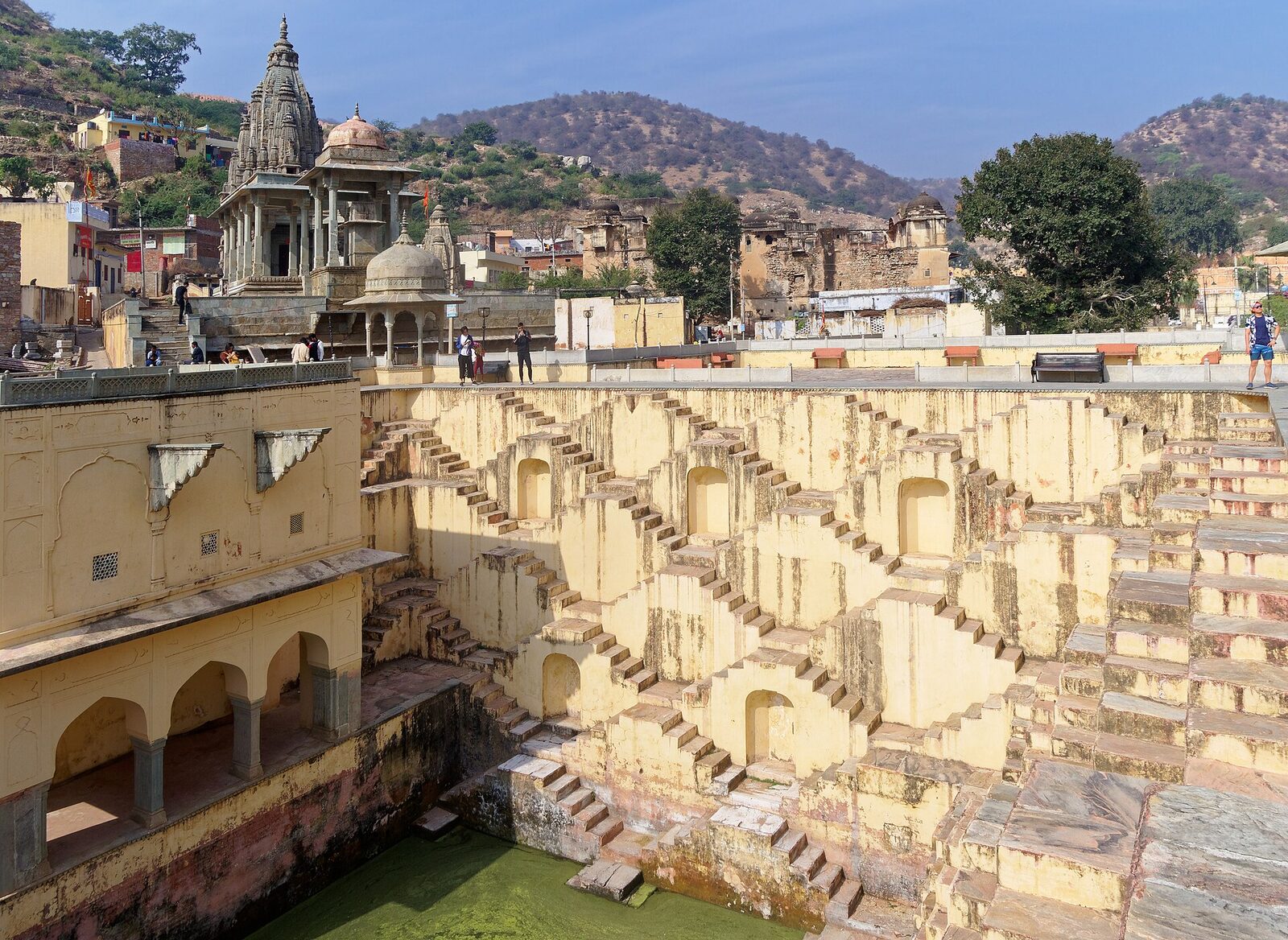
A short walk from Amber, this 16th-century stepwell has criss-crossing staircases on all four sides that make it one of the most photographed spots in Jaipur. Climbing the steps isn't allowed, but the view from the top is the point.
3. Jal Mahal
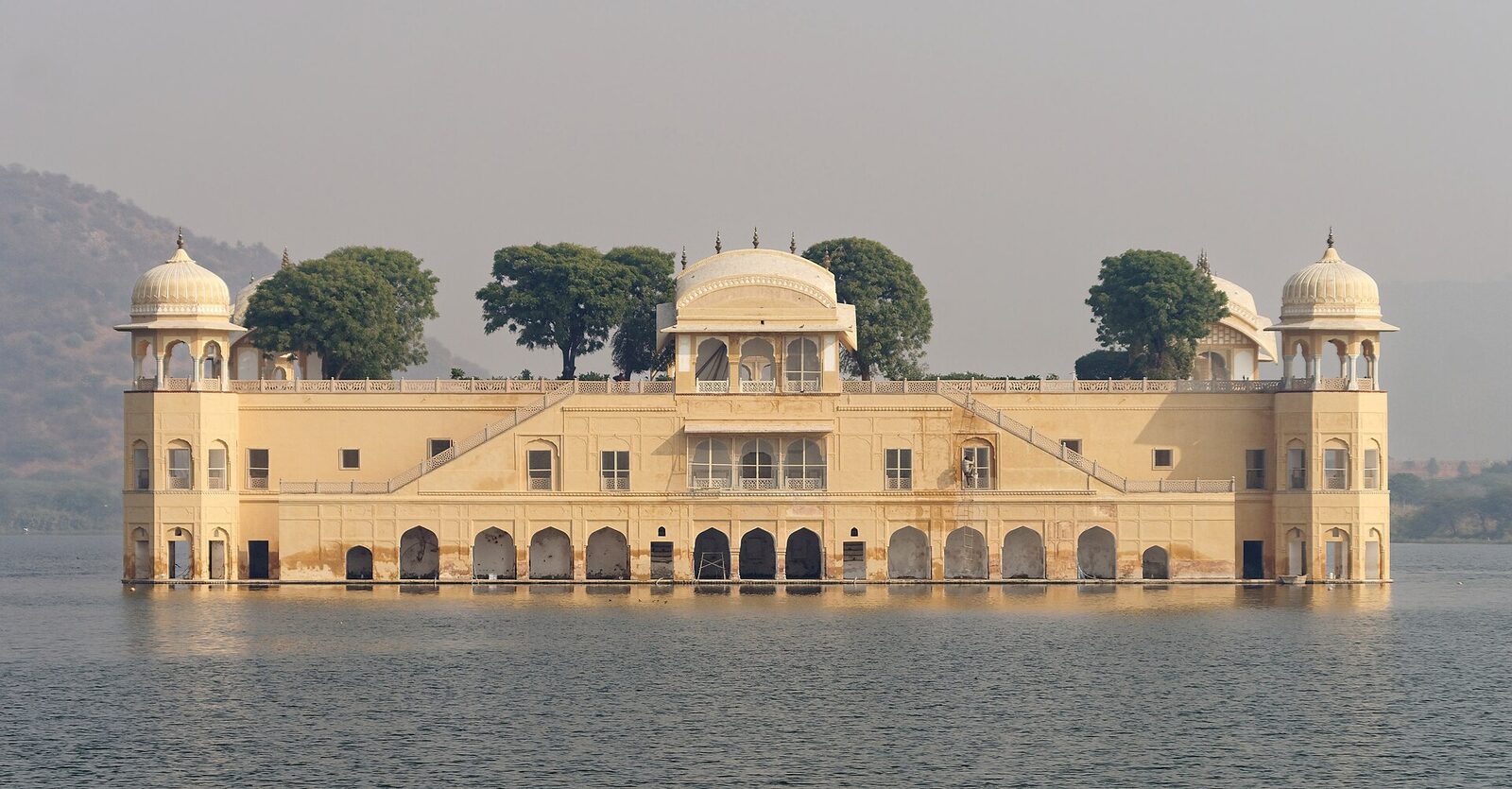
On the road between Amber and the city, the "Water Palace" seems to float in the middle of Man Sagar Lake. You can't go inside, but the view from the promenade, especially in the soft morning light, is lovely.
4. Hawa Mahal
Jaipur's most famous building is a five-storey screen of 953 small windows, built in 1799 so the royal women could watch street life without being seen. The façade faces east, so it's best photographed in the morning, and the best view is from the rooftop cafés across the road. Climb inside for views over the old city.
5. City Palace
Still partly the home of Jaipur's royal family, the City Palace has courtyards, museums of royal costumes and weapons, and the four painted Peacock Gates of Pritam Niwas Chowk. Look for the two enormous silver urns in the Diwan-i-Khas, among the largest silver objects in the world.
6. Jantar Mantar
Next to the City Palace, this UNESCO World Heritage Site is a collection of giant astronomical instruments built by Maharaja Sawai Jai Singh II in the 1720s. The Samrat Yantra is the world's largest stone sundial and tells the local time to within a couple of seconds. Hire a guide or use the audio guide: without one, it's just odd shapes.
7. Nahargarh Fort
The fort on the ridge above the city is the best sunset spot in Jaipur. Walk the ramparts, see the Madhavendra Bhawan with its identical suites for nine queens, and stay as the city's lights come on. There are cafés on the fort for a chai or dinner.
8. Jaigarh Fort
On the hill above Amber, Jaigarh was the military fort that protected it, and it holds the Jaivana, one of the largest cannons on wheels in the world. It's connected to Amber by a walled path and has great views over the Amber palace.
9. Albert Hall Museum
Rajasthan's oldest museum is a grand Indo-Saracenic building with collections of carpets, armour, pottery and an Egyptian mummy. Come in the evening, when the building is lit up, then walk around Ram Niwas Garden.
10. Patrika Gate
This colourful gate at Jawahar Circle has painted walls and arches showing scenes from across Rajasthan. Come early in the morning to photograph it without the crowds.
11. Galtaji Temple
Often called the Monkey Temple, Galtaji is a group of temples and natural water tanks in a narrow gorge on the eastern edge of the city. It's especially atmospheric in the late afternoon. Keep your bags zipped and food out of sight: the monkeys are bold.
12. Birla Mandir
A white marble Lakshmi Narayan temple at the foot of Moti Dungri hill, beautiful when lit up in the evening. Combine it with the Moti Dungri Ganesh Temple next door.
13. Johari Bazaar and Bapu Bazaar
The old city's bazaars are the place for jewellery, block-printed textiles, blue pottery, juttis and bangles. Johari Bazaar is known for jewellery and Bapu Bazaar for textiles and footwear. Bargain politely, and avoid shops a tout or driver insists on.
14. Chokhi Dhani
A recreated Rajasthani village on the edge of the city, with folk dances, puppet shows, camel rides and a big traditional dinner served on leaf plates. It's touristy, but families love it, and the food is good.
15. Chand Baori, Abhaneri
About 95 km from Jaipur on the Agra road, Chand Baori is one of the deepest and most dramatic stepwells in India, with about 3,500 steps arranged in perfect geometry over 13 storeys. It's a good half-day trip, or a stop on the way to or from Agra.
A 2-day Jaipur itinerary
Day 1: Amber and the hills
- 8:00: Amber Fort at opening time
- 10:30: Panna Meena ka Kund, a short walk away
- 11:30: Jaigarh Fort for the cannon and the view over Amber
- 13:30: Lunch on the way back to the city
- 15:00: Jal Mahal from the promenade
- 16:30: Drive up to Nahargarh Fort for sunset
- 19:30: Dinner at Nahargarh or back in the city
Day 2: The old city
- 7:30: Hawa Mahal photographed from a rooftop café over breakfast
- 9:00: Hawa Mahal inside
- 10:00: City Palace
- 12:30: Jantar Mantar
- 13:30: Lunch in the old city: dal baati churma or a Rajasthani thali
- 15:30: Rest, or Patrika Gate if you missed it
- 17:00: Galtaji Temple, or Birla Mandir at dusk
- 18:30: Albert Hall Museum lit up, then shopping in Johari and Bapu Bazaar
With a third day, take a half-day trip to Chand Baori or spend an evening at Chokhi Dhani.
Where to stay in Jaipur
- The old city, near Hawa Mahal: heritage havelis and guesthouses within walking distance of the bazaars, from about ₹1,000 a night
- C-Scheme and MI Road: central, modern hotels and restaurants, about ₹2,500 to ₹6,000
- Amer Road: heritage hotels and palace stays between the city and Amber, from about ₹4,000 and up
For a special night, Jaipur has some of India's most beautiful palace hotels.
What to eat in Jaipur
- Breakfast: pyaaz kachori and mirchi vada, most famously from Rawat Mishthan Bhandar near Sindhi Camp
- Lunch: a Rajasthani thali with dal baati churma, gatte ki sabzi and ker sangri, at one of the old thali restaurants on MI Road or in the old city
- Snacks: a lassi in a kulhad at Lassiwala on MI Road, kulfi, and ghewar from the sweet shops of Johari Bazaar, especially around Teej in the monsoon
- Dinner: laal maas (fiery mutton curry) if you eat meat, or a rooftop restaurant with a view of the Hawa Mahal or Nahargarh
Jaipur's food is rich and often spicy. Ask for less chilli if you need to, and drink bottled or filtered water.
How to get to Jaipur and get around
Getting there: Jaipur is about 285 km from Delhi, around 5½ hours by road on JrnyLoop's estimate. Shatabdi and Vande Bharat trains take about 4½ hours. The airport has flights from most big cities. It's also the first stop of the Golden Triangle with Delhi and Agra, and of most Rajasthan itineraries.
Getting around: app cabs and autos are easy to find. For the Amber and Nahargarh day, hire a car or an auto for the whole day, as the forts are spread out on hills. The Jaipur Metro links the railway station area with the old city at Badi Chaupar. Taxis are hard to find up at the forts, so keep your car or auto waiting.
Jaipur travel tips
Start at opening time. Amber Fort at 8 am and Amber Fort at 11 am feel like different places.
Dress for temples and the heat. Cover shoulders and knees for temples, and carry a cap, sunscreen and water for the forts.
Say no to commission shopping. Drivers and guides often stop at "factories" where they earn a commission. Ask to skip them.
Don't feed the monkeys. Especially at Galtaji and Nahargarh.
The best photo spots in Jaipur
- Hawa Mahal from the cafés opposite, early in the morning when the façade is lit by the sun
- Patrika Gate at sunrise, before the crowds
- Panna Meena ka Kund, with its criss-crossing steps
- Amber Fort from Maota Lake, especially lit up in the evening
- Nahargarh at sunset, looking over the city
- Jal Mahal at dawn, when the lake is still
Day trips from Jaipur
| Day trip | Distance | Why go |
|---|---|---|
| Chand Baori, Abhaneri | about 95 km | One of India's most dramatic stepwells |
| Sambhar Lake | about 73 km | India's largest salt lake, with flamingos in winter |
| Samode | about 40 km | A painted palace and village in the Aravallis |
| Bagru and Sanganer | 15 to 30 km | Watch hand block printing and buy fabric |
| Ranthambore | about 166 km | Tiger safaris, best as an overnight trip |
| Pushkar and Ajmer | about 144 km | The holy lake and the Sufi dargah |
See our weekend getaways from Jaipur for more.
Jaipur on a budget
Jaipur is easy to do cheaply. Stay in a hostel or guesthouse in the old city from about ₹500 to ₹1,500 a night, use the composite ticket, take the metro and shared autos, and eat at the city's famous snack shops, where a full breakfast of kachori and lassi costs under ₹150. A comfortable two-day trip can cost under ₹4,000 per person, not counting travel to Jaipur.
Jaipur with children
Children love the elephant-shaped hills and secret passages of Amber and Jaigarh, the giant instruments of Jantar Mantar, the puppet shows and folk dances at Chokhi Dhani, and boating near Jal Mahal. Choose a hotel with a pool, plan forts for the morning and rest after lunch.
Common Jaipur mistakes
- Starting Amber Fort at midday, in the heat and the crowds.
- Buying single tickets instead of the composite ticket.
- Letting a driver take you to "factories" for gems and textiles, where prices are inflated.
- Missing Nahargarh at sunset, the best view in the city.
- Rushing the old city. The bazaars are best explored slowly, on foot.
Jaipur's festivals
Jaipur is at its liveliest during the Jaipur Literature Festival in late January, Makar Sankranti on 14 January, when the whole city flies kites from its rooftops, Gangaur and Teej, with processions through the old city, and Diwali, when the bazaars are lit up.
Shopping in Jaipur
Jaipur is one of India's best shopping cities, and each bazaar of the old city has its own speciality:
- Johari Bazaar: jewellery, silver and gemstones, plus bandhani and leheriya fabrics
- Bapu Bazaar: textiles, block-printed bedspreads and mojari shoes
- Tripolia Bazaar and Maniharon ka Rasta: colourful lac bangles, often made in front of you
- Kishanpole Bazaar: fabrics and textiles
- Sanganer: block printing and handmade paper, about half an hour from the centre
- Bagru: the traditional dabu mud-resist block printing, further out
Jaipur is also famous for blue pottery, a glazed ceramic in blue and white. Bargain politely in the bazaars, and be very wary of anyone who offers a gem "business deal" or help shipping goods abroad, a well-known scam in Jaipur.
Plan your Jaipur trip with JrnyLoop
Tell JrnyLoop where you're starting from and that you're going to Jaipur, and it plans the route with realistic drive times, groups the sights by area, puts Amber at opening time and Nahargarh at sunset, adds the entry fees for each stop and picks meals Jaipur is known for. It also budgets the trip for your group.
Jaipur is also one of the best weekend getaways from Delhi, and our guide to weekend getaways from Jaipur covers where to go next.
The short version
Give Jaipur two days between October and March. Spend the first on Amber, Jaigarh and the hills, ending at Nahargarh for sunset, and the second in the old city: Hawa Mahal in the morning, the City Palace and Jantar Mantar, and the bazaars at dusk. Buy the composite ticket, start early and eat a kachori every morning.


Comments