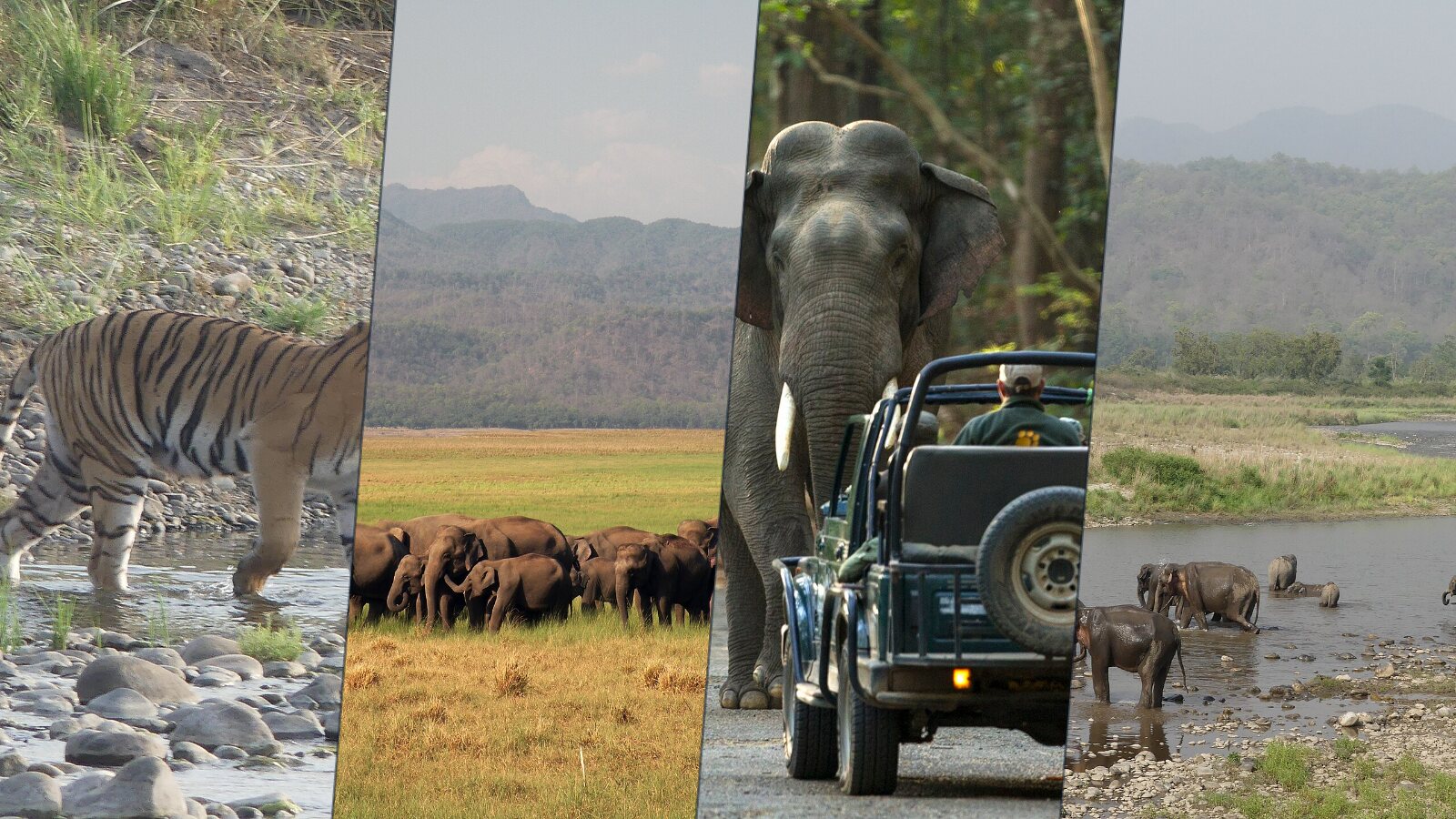
Jim Corbett National Park, founded in 1936 as India's first national park, sits at the foot of the Himalaya along the Ramganga river, about five and a half hours from Delhi. Its sal forests, river grasslands and ridges are home to tigers, leopards, elephants, gharials, otters and more than 500 species of birds. A Jim Corbett safari is one of the easiest wildlife trips for anyone in North India, and one of the most beautiful.
It's also confusing to plan, because the park is divided into zones with different seasons, different permits and very different experiences. This guide explains the zones, how to book, jeep and canter safaris, the special experience of staying overnight at Dhikala, the best time to go, costs and where to stay.
Jim Corbett safari zones
| Zone | Entry gate | Open | Good to know |
|---|---|---|---|
| Bijrani | Amdanda, near Ramnagar | About mid-October to June | The most popular day-safari zone, with open grassland |
| Jhirna | Near Ramnagar | All year | Dry forest, good for elephants and sloth bears |
| Dhela | Near Ramnagar | All year | A newer zone, quieter, next to Jhirna |
| Dhikala | Dhangarhi | About mid-November to mid-June | The heart of the park, best visited with an overnight stay |
| Durga Devi | Near Marchula | About mid-November to June | Hilly, good for birds and the river |
| Garjia | Near Ramnagar | About mid-October to June | A newer zone along the Kosi side |
| Sitabani and Phato (buffer) | Ramnagar and Kaladhungi | Mostly all year | Buffer forest with its own permits |
Opening dates and zone rules are set by the Corbett Tiger Reserve each year, so confirm them on the official website when you plan.
In the monsoon, from July to mid-October, Jhirna and Dhela are usually the only core zones open for safaris. They're a good choice for a monsoon weekend from Delhi.
Dhikala: a night inside the forest
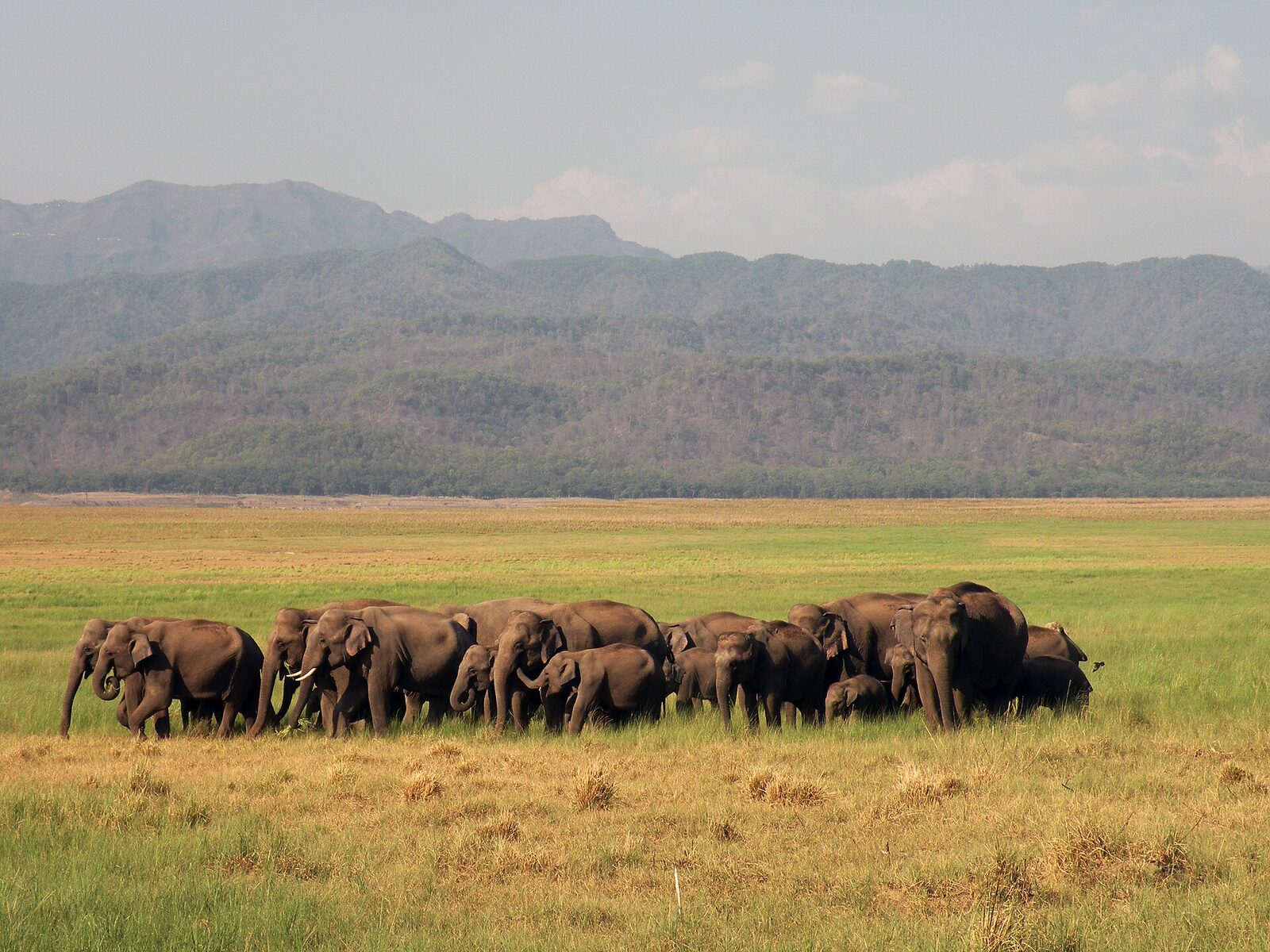
Dhikala is the jewel of Corbett: wide grasslands (the chaurs) along the Ramganga, with the reservoir and the hills beyond, and the best chance of seeing tigers, elephants and deer in the open. Day visitors can see part of it on canter safaris, but the real experience is staying overnight at the Dhikala Forest Rest House inside the core zone, with safaris from the lodge at dawn and dusk.
Rooms are simple and very limited, and they're booked on the official Corbett website, often months ahead for winter weekends. If you can get one, it's one of the finest wildlife experiences in India.
How to book a Jim Corbett safari
- Go to the official Corbett Tiger Reserve website. Permits for each zone and each shift (morning or afternoon) are released in advance and sell out quickly for weekends, holidays and the winter season.
- Choose a jeep (gypsy) or a canter. Jeeps take up to six people and are the most flexible. Canters are bigger buses used mainly for Dhikala day visits.
- Enter the ID details of everyone in the jeep. Carry the same IDs to the gate.
- Hire the jeep and the guide. The permit is separate from the vehicle. Registered jeeps and naturalist guides are arranged at Ramnagar, often through your hotel.
Many websites look official but resell permits at a big mark-up. Book on the official Corbett website, or through a registered local operator or your hotel.
Safari timings
There are usually two shifts a day:
- Morning: from around sunrise for about 3 to 4 hours
- Afternoon: from early afternoon until sunset
Exact times shift through the year. Be at the gate early, as the queue for checking permits and IDs can take time.
The best time for a Jim Corbett safari
| Months | What to expect |
|---|---|
| November to February | Cool, pleasant days and cold mornings. Dhikala is open. Great birdlife, with winter migrants |
| March to June | Hot, especially in May and June, but the best time for tiger sightings, as animals come to water |
| July to mid-October | Monsoon. Most zones are closed. Jhirna and Dhela stay open |
For the best mix of weather and sightings, go in February to April. For birdwatching, go from November to February.
What a Jim Corbett safari costs
Costs are made up of the permit, the jeep hire and the guide's fee. Shared between six people in a jeep, a safari usually works out to roughly ₹1,200 to ₹2,000 per person, more at weekends and in the most popular zones, and more for foreign visitors. A private jeep for your group costs the full amount for the vehicle.
A two-night trip with two or three safaris usually costs about ₹8,000 to ₹15,000 per person on a budget, sharing a room, including the stay and food but not the journey from Delhi.
Where to stay
| Area | Price a night | Why |
|---|---|---|
| Ramnagar town | about ₹1,200 to ₹2,500 | Cheapest, near the safari office and the station |
| Dhikuli, along the Kosi river | about ₹6,000 to ₹20,000 | Riverside resorts, many with pools |
| Dhikala Forest Rest House | about ₹1,500 to ₹4,000 | Inside the core zone, very limited |
| Bijrani and Jhirna forest rest houses | varies | Simple government lodges inside the park |
Other things to do around Corbett
- Garjia Devi Temple: a temple on a rock in the middle of the Kosi river
- Corbett Museum, Kaladhungi: Jim Corbett's winter home, with his belongings and stories of the man-eaters he hunted
- Corbett Falls: a waterfall in a teak forest near Kaladhungi
- River walks and birding along the Kosi
- Nainital: about 2 hours away, for a few days in the hills. See our guide to weekend getaways from Delhi
How to get to Jim Corbett
- By train: Ramnagar station, at the edge of the park, has trains from Delhi, including overnight services. Kathgodam is another option, further away.
- By road: about 256 km from Delhi, around 5½ hours on JrnyLoop's estimate, via Moradabad and Kashipur.
- By air: the nearest airport is Pantnagar, about 2 hours away, with a few flights. Most people fly to Delhi.
Tips for a better safari
- Book at least two or three safaris. Tigers in Corbett's dense forest are harder to see than in central India.
- Combine zones. A morning in Bijrani and an afternoon in Jhirna give you two very different forests.
- Wear muted colours and layers. Winter mornings in an open jeep are freezing.
- Carry binoculars. Corbett's birds, from hornbills to fish eagles, are a highlight.
- Respect the rules. No getting out of the jeep, no noise, no feeding animals.
Jim Corbett: the man behind the name
The park is named after Jim Corbett (1875 to 1955), a hunter, naturalist and writer who grew up in Nainital and Kaladhungi. In the early 20th century, he was called on to hunt man-eating tigers and leopards that had killed hundreds of people in the villages of Kumaon, and his books, especially Man-Eaters of Kumaon, became classics. Later in life, he turned to photography and conservation, and he helped set up Hailey National Park in 1936, India's first national park. It was renamed Corbett National Park after his death. His winter home at Kaladhungi is now a museum.
In 1973, Corbett became the first reserve under Project Tiger, India's flagship tiger conservation programme.
What you can see in Corbett
Corbett's mix of sal forest, grassland, river and hills supports an extraordinary range of wildlife:
- Tigers and leopards, though dense forest makes them harder to see than in central India
- Asian elephants, often in large herds in the Dhikala grasslands and along the Ramganga
- Deer: spotted deer (chital), sambar, hog deer and barking deer
- Crocodiles and gharials in the Ramganga, and otters along the riverbanks
- Sloth bears, wild boar, jackals and yellow-throated martens
- More than 500 species of birds, from great hornbills and fish eagles to kingfishers and pheasants, making Corbett one of India's best birding destinations
Canter safaris to Dhikala
If you can't get a room at the Dhikala Forest Rest House, the canter safari is the only way for day visitors to see the Dhikala zone. Canters are large open buses that leave from the Dhangarhi gate and spend several hours in the Dhikala grasslands, along the Ramganga and its reservoir. They're shared and less flexible than a jeep, but Dhikala's landscape and its elephant herds make it worth it. Book canter seats on the official Corbett website.
Elephant rides and why they've changed
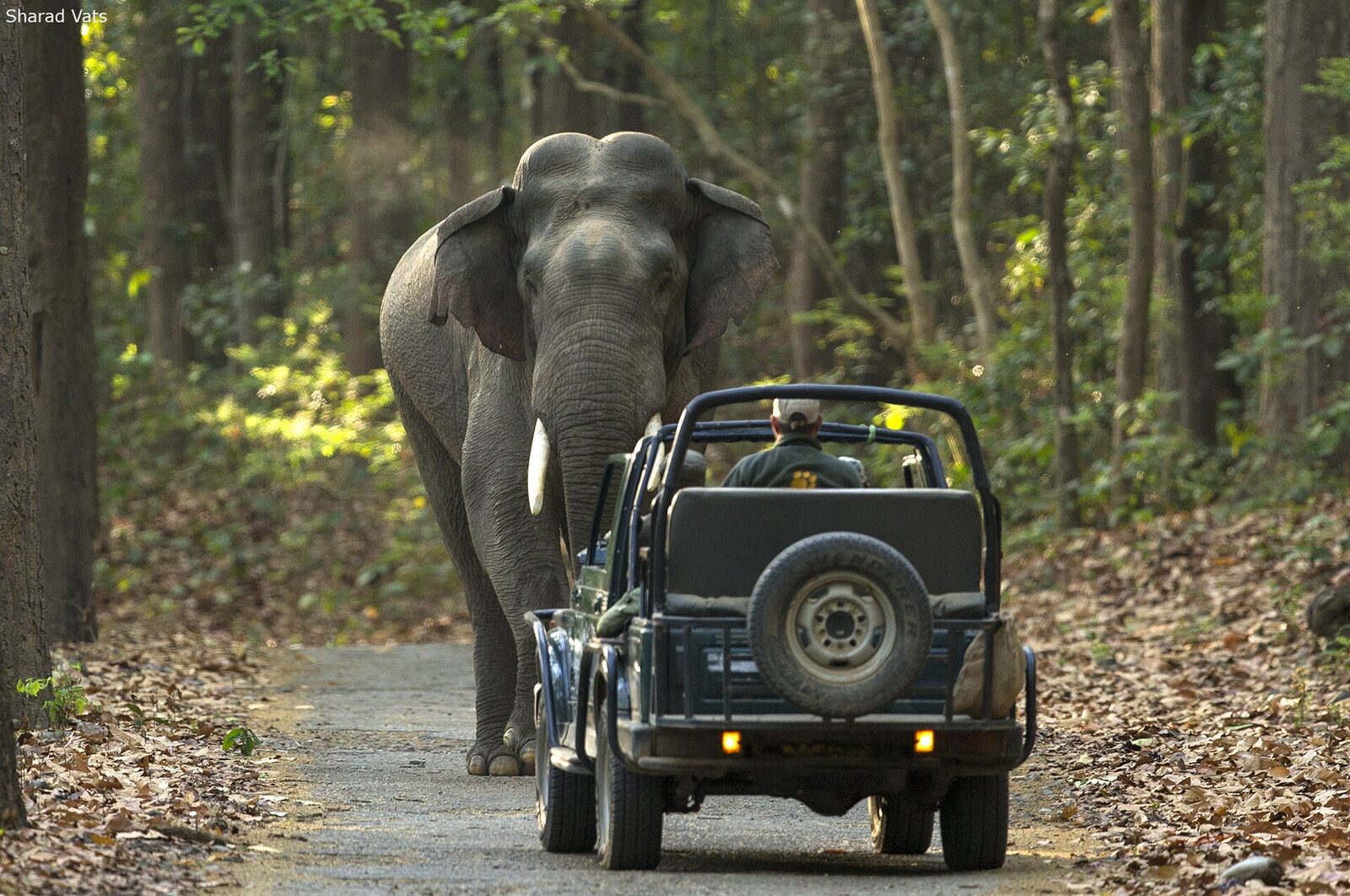
Elephant safaris were once a common way to see Corbett's grasslands. Today, they're much more limited, and many travellers choose not to take them because of animal welfare concerns. Jeep and canter safaris show you the park just as well.
Birdwatching in Corbett
Corbett and the surrounding foothills, including Sattal, Pangot and the Kosi river valley, form one of the richest birding regions in India. The best time is November to March, when winter migrants arrive. Look for the great hornbill, Pallas's fish eagle, ibisbill, wallcreeper, red-billed blue magpie, and dozens of species of kingfishers, woodpeckers and flycatchers. Many resorts offer guided birding walks, and specialist birding guides work around Ramnagar.
A 3-day Corbett plan
| Day | Plan |
|---|---|
| 1 | Drive or take the train from Delhi to Ramnagar; afternoon safari in Jhirna or Dhela; evening at the Garjia Devi temple |
| 2 | Morning safari in Bijrani; rest; afternoon safari in Jhirna, or a birding walk along the Kosi |
| 3 | Morning safari, Corbett Museum and Corbett Falls at Kaladhungi, then drive back, or continue to Nainital |
If you have a Dhikala booking, spend days 2 and 3 there instead, with safaris from the lodge.
Corbett with children
Children love the elephants, the jeep safaris and the river walks. Choose a resort along the Kosi with a pool and open lawns, plan two or three safaris rather than six, and carry warm layers for winter mornings. The Corbett Museum at Kaladhungi tells the story of Jim Corbett in a way children enjoy.
Common mistakes in Corbett
- Booking a "safari package" on an unofficial site without a confirmed permit.
- Expecting a tiger on every safari. Corbett's forest is dense; enjoy the elephants and birds.
- Not carrying ID that matches the permit.
- Booking Bijrani or Dhikala in the monsoon, when they're closed.
- Wearing bright colours and talking loudly in the jeep.
Corbett's rivers and landscapes
The park is shaped by the Ramganga, which flows through its heart, and the Kosi, along its eastern edge. Dense sal forest covers the hills, while the chaurs, wide grasslands, open up around Dhikala, where elephants, deer and sometimes tigers can be seen. The reservoir of the Kalagarh dam fills the western part of the park and attracts crocodiles, gharials and many birds. This mix of forest, river and grassland is why Corbett has so much wildlife, and why each zone looks so different.
What to wear on a Corbett safari
Mornings in Corbett are cold from November to February, often close to freezing in an open jeep, so wear warm layers, gloves and a cap, and take them off as the day warms up. In April and May, afternoons are hot, so wear light cotton clothes, a hat and sunscreen. In every season, choose earth colours like khaki and olive, avoid perfume, and carry a scarf for the dust.
Combining Corbett with Nainital
Corbett is about two to three hours from Nainital, so many travellers combine the two. Spend two nights in Corbett for safaris, then drive up to Nainital, Bhimtal or Mukteshwar for a few days in the hills. On the way, stop at Kaladhungi, where Jim Corbett's winter home is now a museum, and the nearby Corbett Falls. This makes a relaxed week from Delhi, with forests, lakes and Himalayan views.
Corbett with older parents
- Choose the Bijrani or Jhirna zones, which are closer to Ramnagar, for shorter drives.
- Book a canter or a jeep with a front seat for comfort.
- Pick a resort near the gate, with ground-floor rooms.
- Do fewer safaris, with rest in between, as early mornings and bumpy tracks can be tiring.
Responsible safaris in Corbett
- Keep your voice low and switch phones to silent.
- Never ask your driver to chase an animal or go off the track.
- Don't feed monkeys or other animals.
- Carry your plastic out with you.
- Choose resorts that respect noise and light rules, as loud music and bright lights near the forest disturb wildlife.
Gates and getting around Ramnagar
Ramnagar is the base for most of Corbett's zones. The Dhangarhi gate leads to Dhikala, the Amdanda gate to Bijrani, and the Jhirna and Dhela zones have their own gates. The gates are some distance apart, so check which one your booking uses, and plan time to reach it before the safari starts. Registered jeeps and drivers pick you up from your stay or the gate.
Plan your Corbett trip with JrnyLoop
Tell JrnyLoop where you're starting and that you're going to Jim Corbett, and it plans the journey with realistic drive or train times, schedules your safaris for sunrise and the afternoon, adds Garjia, the museum and the falls between them, and budgets the trip for your group. Pin your safari permits as fixed bookings and the rest of the plan works around them.
For India's other great tiger reserves, see our guide to a tiger safari in India, and for the hills nearby, our weekend getaways from Delhi and list of hill stations in India.
The short version
Book your Jim Corbett safari permits on the official Corbett website as soon as they open, in a jeep shared by up to six people. Go between February and April for the best mix of weather and sightings, or in winter for birds. Try to stay a night at Dhikala, take at least two or three safaris across different zones, and in the monsoon, choose Jhirna or Dhela, which stay open.


Comments